
Bonds Help You Win Work and Reduce Risk
When bidding on a project against a competitive field, the owner isn’t just evaluating numbers. They’re evaluating risk.
They’re asking which general contractor can:
- Deliver this job to their standards
- Stand behind their work
- Give them confidence that this project will finish as planned
That’s where AIA A312 Performance and Payment bonds come in. When bonding shows up, owners respond differently. Confidence increases. Win rates improve. And during execution, there’s a defined structure that supports the project if challenges arise.
Bonding Signals Strength to Owners
As a general contractor, your reputation is built on your project history. Sureties leverage this history when evaluating bond issuance. Bonds are both a signal of professional credibility and provide financial assurance against the real risks every project carries.
These scope changes could include:
- Tight schedules
- Layered subcontractor coordination
- Financial commitments across the job
Even with the best planning and execution, issues can arise. When bonding isn’t part of the structure:
- Owners may require additional assurances or controls.
- Financial exposure can fall more heavily on the GC.
- Subcontractor payment concerns can create friction.
- Confidence in project continuity becomes less certain.
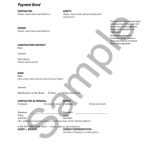
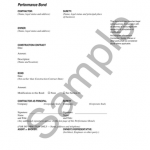
With A312™ – Performance Bonds and A312™ – Payment Bonds in place, risk is clearly defined and financially backed.
How A101 + A312 Work Together
How Bonds Reinforce Your Contract Obligations
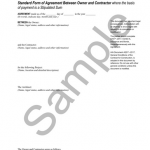
- A101® defines your obligation.
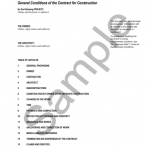
- A201® governs execution.
- A312 Performance and Payment bonds reinforce both with financial assurance.
In a stipulated sum contract under A101, the GC commits to delivering the project for a fixed price. A312 Performance and Payment bonds back that commitment with financial assurance.
How A312 Bonds Protect the Project
What Performance and Payment Bonds Ensure
A312 Performance and Payment bonds introduce a financial backing that supports the work you’ve already agreed to perform.
- Performance bonds demonstrate that the project will be completed as agreed.
- Payment bonds ensure subcontractors and suppliers are paid.
What Bonds Do for General Contractors
From your perspective as the GC, bonds:
- Strengthen your position in the bid process.
- Signal financial stability.
- Demonstrate a track record of performance.
- Limit financial exposure during the project by sharing risk with a surety.
- Define a path forward if issues arise.
This isn’t about expecting something to go wrong. It’s about backing your work with a structure that supports it.
Evaluate Your Bonding Strategy Before You Bid
Before bidding or starting a project, step back and evaluate:
- Do you have bonding capacity aligned with the size and type of project?
- Are performance and payment bonds required by the owner?
- Do your bond terms align with your A101 and A201 obligations?
- Are you using bonding as part of your competitive positioning?
Stronger Projects Start with Financial Backing
The GCs who consistently win and deliver strong projects aren’t just competitive on price. They bring confidence to the table by showing they can take on work and stand behind it.
With an unlimited subscription to AIA Contract Documents, you’ll have access to A101, A201, A312 Performance and Payment bonds, and all the agreements you need for a successful project.