
Most disputes don’t start with a lien problem. They start with a payment delay, a pricing disagreement, or a communication breakdown. If those issues are not addressed, lien rights are often the next step.
If you manage construction work, it’s important to understand who has lien rights, how they interact with contractual payment rights, and how they affect project stability. So let’s take a look at how liens operate and what you can do to reduce disruptions before they start.
What Are Lien Rights?
Who Qualifies for Lien Protection
Lien rights are a unique tool for construction work on privately owned property.
If you work on a construction project that results in the permanent improvement of real property, you may have lien rights. This typically refers to physical work done at the project site, though many states also provide lien rights to those doing design work.
Material suppliers and equipment renters also typically have lien rights if their supplies or equipment are used in the permanent improvement of real property.
What Filing a Lien Actually Means
The right to file a lien is the right to stake a claim in the property title or deed because payment has not been made as expected. As a result, the title to the project property is clouded and unclear.
If the lien is not resolved, the claimant has the right to file a lawsuit to enforce that lien, which could result in the forced sale of the property. This is called a mechanics lien foreclosure.
Lien foreclosures rarely happen, but they speak to the ultimate power of lien rights.
Who Has Lien Rights?
How Lien Rights Flow Down the Project Chain
Lien rights extend down the payment chain. For instance, if a contractor hires a subcontractor, and that subcontractor hires another subcontractor, that sub-subcontractor will often be entitled to lien rights.
The same is true for suppliers and equipment renters hired by contractors and subcontractors. Someone who seems relatively far removed from the architect or owner could ultimately throw a major wrench in the project.
Other Legal Tools for Payment
The simple fact is that contractors and suppliers have the right to be paid for their work. Naturally, there are several different tools at their disposal to force payment.
Lien rights are one of the more severe options that exist to enforce that right. Other options include breach of contract claims, prompt payment claims, and retainage claims.
How Do Construction Liens Work?
Lien Impacts for Stakeholders
Construction liens serve as a payment distress signal on a project and affect everyone differently. For owners, lenders, and others managing the project – they create potential ownership disputes over the project property.
When a lien is filed against the property, it will appear in title searches as an “encumbrance,” which lenders, title companies, and prospective owners or investors will want cleared up immediately. In fact, for projects with lenders involved, the lender will often refuse to approve draws until any liens are cleared up.
Theoretically, if a lien isn’t resolved, it could result in the property being foreclosed upon and force a sale. That’s rare, but lien claims’ ability to attract this level of attention is a key reason they’re such a powerful tool (and a reason project ownership and management doesn’t like them).
Lien Impacts on Operations
Liens also create more practical issues for those with boots on the ground.
When payments slow down or stop, the work does too. A freeze or delay in payments can also lead to delays in materials or equipment. If contractors and subcontractors aren’t getting paid, they might send their crew elsewhere, creating additional scheduling and sequencing issues.
When Liens Turn into Legal Action
Liens often lead to lawsuits. Claimants may “enforce” or “foreclose” their lien by filing a lawsuit, and those lawsuits could include additional claims, like breach of contract.
These legal tensions could then create further issues, and the problem could spill over to others on the job.
The Risk of Double Payment
Liens could also lead to double payment (though some states have protections against this). Here’s a practical example. A general contractor fully pays their subcontractor. But the subcontractor is going out of business and fails to pay their supplier. That supplier then files a lien. Work needs to continue, but the owner wants the lien resolved, and now the bank won’t release any additional funding. Who’s going to pay?
The general contractor might try to recoup some of that payment from their subcontractor, but in practice, recovery is often unlikely.
As an immediate fix, the general contractor might pay the supplier to get the project going again. Or the owner might step in and go after the subcontractor later. Either way, someone paid twice, and that eats into the margin.
For more on how lien filings work, read our article on the protection and enforcement of lien rights.
How Do Construction Liens Affect Payments?
Why Liens Are a Powerful Payment Tool
Construction liens may be the most direct tool for forcing payment.
A lien claimant can draft and record their lien at a relatively low cost, making it much easier than filing a lawsuit.
While there are other options for pursuing payment – many of those require the help of an attorney or a long recovery timeline.
How Liens Pull in Additional Stakeholders
Unlike other remedies, mechanics liens pull a lot of project stakeholders into the dispute. Breach and other payment claims will exist, but those remedies keep the dispute between the claimant and the person who hired them.
As mentioned above, a lien filing broadens the dispute. It stakes a claim in the property itself, which means the owner, lender, and others leading the project will want the lien resolved.
As a result, these third parties are more likely to put extra pressure on whoever is directly involved in the dispute to resolve it. Put simply, when the top of the payment and ownership chain are breathing down your neck, you’re probably going to be more motivated to resolve the dispute.
How To Reduce Lien Risk on Your Project
Owners, lenders, general contractors, and architects should all be invested in preventing liens before they are filed. Requiring lien waivers with pay app submissions from everyone working on the project is best practice for construction payments. But it’s not the first step.
Mapping Out Every Party on the Project
The first thing to do is to chart out every contractor, subcontractor, supplier, and equipment vendor on the project. Depending on the complexity, this may take quite a bit of effort, but it’s a crucial step to determine who to collect lien waivers from.
If someone refuses to submit a waiver, or if you receive a lien threat, this quick reference guide will help you understand who they are, what work they’re doing, who they’re doing the work for, and likely why there’s an issue.
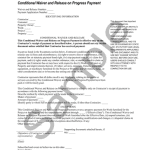
Benefits of Conditional Lien Waivers with Pay Apps
Requiring and collecting conditional lien waivers with payment applications provides a security blanket.
Those reviewing the pay apps know that if payment is made, those lien waivers will automatically go into effect. And if someone threatens a lien after being paid, it’s easy to point to the lien waiver as evidence that payment was properly made and the claim has no grounds.
If they still go ahead and file their lien, the waiver (coupled with proof of payment) will be worth its weight in gold.
Consistency Matters: Lien Waiver Process
A lien waiver process should not be improvised.
Every construction business should adopt a lien waiver process that defines:
- The company’s approved templates.
- Who is authorized to review and sign waivers.
- How payment verification is documented.
- Where executed waivers are stored and tracked.
- When, if ever, deviations from standard forms are allowed.
Learn more about how to choose the right type of lien waiver.
Why Standardization Reduces Risk
The bottom line is that standardization reduces risk. Doing the work of setting up a lien waiver policy means you don’t have to start fresh every time you receive a waiver request or submit a pay app. The fewer variations in your waiver language and approval process, the fewer opportunities for error.
AIA Contract Documents publishes state-specific and generic lien waiver and release forms designed to align with applicable requirements and common industry practice.
Using consistent, vetted templates and building your internal policy around them can help make your payment process safer and more secure.
Simplify Your Lien Waiver Process
Find the right lien waiver and release form for your firm’s needs.