When Contract Details Get Skipped, Problems Start Fast
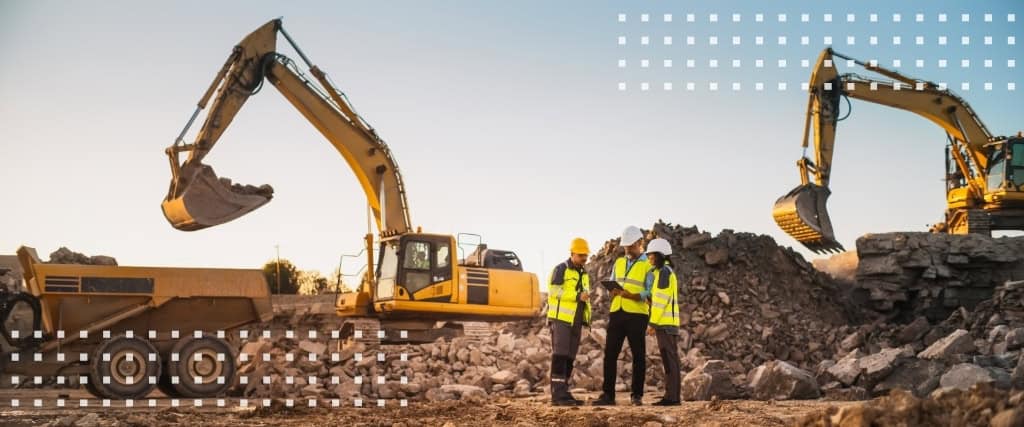
Consider this all-too-common situation: a general contractor lands a fast-track commercial project. The pace is aggressive, and the sum and schedule are clear, but the General Conditions are undefined, and the GC doesn’t want to risk losing the job by getting bogged down in the contract details.
Ground breaks, and the questions immediately start.
- Who approves a substitution?
- What happens when the owner changes the scope?
- When does payment get released?
- Who has the final say when there’s a disagreement?
At first, these feel like routine project questions. But when the answers aren’t clear, momentum starts to slow. Now, instead of building, you’re managing confusion.
Pressure-Test Your Contract Before Work Begins
Best-in-class GCs take the time to pressure-test the contract before the job starts, not just for completeness, but also for clarity in execution.
Key Questions to Resolve Before the Job Starts
Questions to ask when reviewing the contract include:
- Is A201 explicitly incorporated into the A101 agreement?
- Are payment timelines aligned with certification requirements?
- Is the change order process clearly defined and understood?
- Are dispute resolution methods established upfront?
- Does your team know who has the authority to approve decisions on the job?
If any of these are unclear at the start, they won’t stay contained in the contract; they will show up in the field where they’re harder to manage.
A101 Defines the Deal and A201 Defines the Work
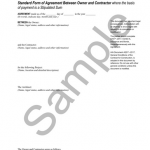
Most projects begin with A101® – Agreement Between Owner and Contractor, and that’s the right place to start. It establishes core business terms, such as the contract value and project schedule. But A101 is intentionally concise. It defines what has been agreed to, not how the work will be carried out.
It doesn’t tell you:
- How changes are handled in real time
- How disputes move from issue to resolution
- How payment gets reviewed and approved
- Who is responsible for what during construction
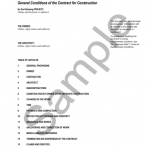
That’s where A201® – General Conditions of the Contract for Construction comes in. General Conditions define the project’s operational rules: who holds authority, how changes are processed, and how disputes are resolved. Together, A101 and A201 form the Contract for Construction, connecting the agreement to how the job is executed.
What A201 Actually Controls on the Job
In construction, General Conditions define the project’s operating framework:
- Roles of the Owner, Contractor, and Architect
- Decision-making authority
- Change and claims processes
- Payment certification procedures
This is what turns a static agreement into a working job. Instead of relying on impulsive decisions, the team works from a shared understanding of how the project moves forward.
To understand how AIA documents function as a coordinated system, see our Essential AIA document pairings for General Contractors.
What Happens When A201 Isn’t in Place
When A101 stands alone, or a project’s terms and conditions aren’t clearly aligned, the breakdowns are predictable:
- Verbal direction replaces formal change processes.
- Payment expectations don’t match certification requirements.
- Disputes rely on interpretation instead of structure.
- Subcontractor issues escalate upstream.
These issues don’t always show up at once, but they do build.
And as the GC, you’re left to coordinate among owner expectations, architectural decisions, and field execution. Without a consistent framework tying it together, the job becomes reactive instead of controlled.
Why A101 + A201 Create More Predictable Projects
The GCs who run the most predictable projects don’t rely solely on experience. They start with a contract structure that defines decision-making, change management, and payment terms.
Because once construction begins, there’s no time to define the process. It’s either already in place, or every issue becomes a potential for dispute. A201 provides the clarity needed for success, keeping decisions moving, issues manageable, and crews focused on the job.
Build a Stronger Contract System with A101 + A201
The right tool can make it easy to build an efficient, scalable system that improves your controls, visibility, and communication. With an Unlimited Subscription, you’ll have access to AIA A101, AIA A201 General Conditions, and all the coordinated agreements you need for every phase of your project.