
Lien waivers are one of the most common construction payment documents. However, they are often misused or misunderstood. Here’s what you need to know about how lien waivers work, what common issues you might face, and how using them well can benefit everyone on a project.
Why Lien Rights Matter
Construction projects depend on layered payment chains. When those payments flow, lien rights stay in the background. When they don’t, liens can surface quickly.
A lien is a legal claim filed against a property by a contractor, subcontractor, or supplier who hasn’t been paid for work or materials. It’s a public notice that money is owed on the project, and it stays attached to the property until the debt is resolved. A lien can stall funding, strain relationships, and escalate a small dispute into a larger problem, even when upstream parties believe they’ve paid what they owe.
Lien waivers are how teams manage that risk. And when used correctly, they reduce lien exposure, surface payment issues early, and bring discipline to the payment process.
What Is a Lien Waiver and Who Should Provide Them?
Lien waivers are documents that waive the right to file a construction lien. They’re often included alongside pay apps. When payment is requested, a corresponding lien waiver is usually submitted to show that the submitter waives their right to file a construction lien in exchange for payment.
The right to file a lien is a powerful tool or forcing payment. When liens are filed, they’re incredibly disruptive to a project, often freezing job payments until the lien is resolved. Because they’re so powerful, lien filings are often seen as a last resort.
Lenders, owners, and developers typically want reassurance that a lien won’t pop up after they’ve paid. And it’s more than just their direct contractors; subcontractors, material suppliers, and equipment renters all have lien rights, and should be required to submit lien waivers. Traditionally, a general contractor collects waivers from direct subs and vendors, as well as any vendors used by those subcontractors.
Types of Lien Waivers Explained
Conditional Waiver vs. Unconditional Waiver
Conditional Lien Waivers
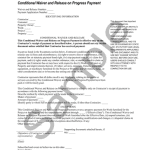
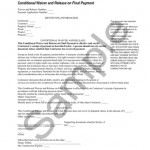
Conditional lien waivers, like the G901™ - Generic Conditional Waiver and Release on Progress Payment and the G903™ - Generic Conditional Waiver and Release on Final Payment, are especially common and usually accompany a pay app submission.
A conditional lien waiver effectively states that lien rights will automatically be waived upon payment. When done right, nothing gets waived until payment is received, so both parties share the risk.
Unconditional Lien Waivers
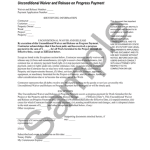
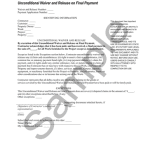
Unconditional lien waivers, like the G902™ - Generic Unconditional Waiver and Release on Progress Payment and the G904™ - Generic Unconditional Waiver and Release on Final Payment, waive lien rights once signed and submitted. That means timing matters.
Signing an unconditional waiver before payment is received and confirmed could mean giving up one of the strongest tools for securing payment. That’s why unconditional waivers are best used after payment has been received and verified.
Final Lien Waiver vs. Partial Lien Waiver
Partial Lien Waiver
Partial lien waivers waive lien rights for a portion of the project. Anyone with ongoing obligations will likely not want to submit a final lien waiver until the end of the work.
Final Lien Waiver
A final lien waivershould typically only be used when all of your project work is complete because they waive all lien rights. If retainage is being withheld, it’s a good idea to specify that in the exceptions. For example, a framing contractor might submit a final lien waiver relatively early in the project, but a general contractor likely wouldn’t submit a final lien waiver until the project is closed, since they’ll have ongoing obligations.
Lien Waiver vs. Lien Release: What’s the Difference?
Simply put, lien waivers are exchanged or mailed, while lien releases are filed in property records. Lien releases work to undo the damage a lien does to the property title, while lien waivers are submitted in anticipation or receipt of payment.
Unfortunately, there’s a huge asterisk.
The construction industry, and even legislators, regularly use the terms “lien release” and “lien waiver” interchangeably or in tandem. It’s common for someone to request a lien release even though no lien has been filed, and some state statutes even use both terms the same way.
Context clues are often the best way to understand what you’re being asked for. If no lien has been filed, a lien waiver is almost certainly the right document since there is no lien to release.
How To Choose the Right Lien Waiver
The right lien waiver depends on three things:
- The location of the work.
- Whether the work has been completed.
- Whether payment has been made.
First, you should check whether your state has specific lien waiver laws. Some states require specific forms, so if you’re doing work in one of these states, you need to use that state’s form.
Next, you should understand the difference between conditional and unconditional lien waivers so you can use each form correctly. Even with standardized templates, it’s best to review each waiver to confirm that the timing and scope match the payment being made.
Managing Lien Waiver Responsibilities
Once your organization understands how lien waivers work, you should create an internal policy outlining how waivers will be requested, reviewed, submitted, and handled. Ideally, you should limit waiver responsibility to a select group in the company that best understands how waivers work and how to evaluate them.
After that, the real work begins. Your team must follow the process consistently, regardless of whether you’re receiving, collecting, or submitting lien waivers.
Collecting Lien Waivers is Critical
As a general contractor, you submit your own lien waivers, plus collect lien waivers from others. When you submit pay apps, you collect waivers from direct subcontractors and vendors, as well as the vendors that those subcontractors have hired.
While it may seem an administrative burden, this process is crucial to avoid a lien filing.
Collecting lien waivers also provides an opportunity to learn about potential payment issues. While you should be aware of any ongoing issues with your subs or vendors, you don’t always have perfect visibility into everyone on the project.
If someone is reluctant to provide a lien waiver, you should investigate further to make sure there aren’t any payment disputes developing in the dark.
Using AI for Lien Waivers
AI tools can draft almost anything, including lien waivers. The real question is whether they should.
In most cases, using AI to generate lien waiver forms introduces unnecessary risk.
In some states, lien waivers require specific language or formatting. An AI-generated form could miss those requirements entirely, or alter required wording in subtle ways, creating avoidable exposure.
Even in states without required forms, using AI to draft them offers little upside. In practice, it’s best to stick to a standard lien waiver form that your organization is comfortable with, so there are fewer unknowns.
How To Manage Lien Waiver Risk
Anyone who has received full payment does not have lien rights, regardless of whether they submitted a lien waiver. So, if everyone is paid on time and in full, there is no need to submit or collect lien waivers.
Of course, in construction, payment chains are complex and lengthy. Even if an owner pays on time every time, payment issues can happen further down the line. Using lien waivers properly will help you identify potential problems before they escalate.
A Practical Example of Why You Need Lien Waivers
Consider this example situation. An owner releases payment to their general contractor. That contractor pays their subcontractors shortly thereafter. Those subcontractors are supposed to pay their suppliers once they’ve received payment. To cover their bases, the owner tells the general contractor that they need lien waivers from every subcontractor, supplier, or equipment renter who has set foot on the job.
The general contractor knows that their plumbing subcontractor has had site deliveries. They’ve seen the plumbing supply truck a few times on site. When they ask their sub for that supplier’s lien waiver, the sub casually mentions an ongoing argument on the costs and that the waiver will come soon.
That causes some concern for the general contractor. The situation is extraordinarily common, but that doesn’t mean it should be ignored.
If the general contractor fails to follow up on the waiver, a dispute might fester. One day, the owner could receive notice that their property has been liened by the plumbing supplier. If that happens, the bank will freeze their project funding. Now, everyone on the project is experiencing a payment delay, and everyone knows that someone else had to file a lien to make sure payment was secured. They’ll likely think that they should file too.
It’s easy to see how small issues and red flags can snowball into something more serious. Collecting lien waivers can help you detect issues early and resolve them before too much damage is done.
Key Takeaway
Lesson of the day? Treat lien waivers as part of your risk controls, not just your paperwork. When handled consistently, lien waivers protect your cash flow, your relationships, and your projects.
Explore industry standard lien waivers and release forms to choose the right ones for your project needs.