
Lien waivers are some of the most important construction documents. But not every waiver is made equally. There are several different states (12, to be exact) that publish up to 4 state forms.
Generally, these lien waiver and release forms will fall into four categories: conditional, unconditional, progress, and final waivers. Let’s break them down.
The 4 Main Types of Lien Waivers (And When to Use Them)
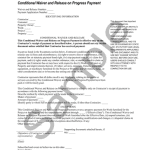
Conditional Progress Lien Waiver: Best for Ongoing Work Before Payment
Conditional Progress Lien Waivers or Conditional Partial Lien Waivers are most typical for pay app submissions. These waivers serve as a promise to waive lien rights once paid, and they acknowledge that only a portion of the work has been completed.
Once payment is made, the waiver automatically takes effect, and no further action is required to fully waive the lien rights for that specific work or period.
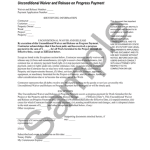
Unconditional Progress Lien Waiver: Use Only After Payment Is Received
Unconditional Progress Lien Waivers or Unconditional Partial Lien Waivers are just like the waivers described above, except they’re unconditional. Once this waiver is signed and submitted, lien rights are waived. These waivers are most appropriate when payment has already been made for the given portion of the work.
For contractors, subs, and suppliers, it’s possible that someone will request an unconditional waiver before payment is made. That’s generally not advisable.
If the work is completely finished, one of the final lien waivers may be better.
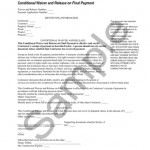
Conditional Final Lien Waiver: For Project Closeout Before Final Payment
Just like conditional progress waivers, these conditional final waivers will automatically take effect once payment is made.
There aren’t any additional steps to fully waive lien rights, but some parties may also request a final unconditional waiver as part of their closeout process.
If there’s substantial work remaining beyond warranty work or minor “punch list” items, a partial waiver may be better.
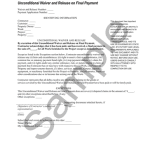
Unconditional Final Lien Waiver: When Work Is Complete and Paid
Final unconditional waivers completely waive all lien rights. They are generally only appropriate if the work has been completed and paid for.
These waivers are technically not necessary in most situations, though they do provide peace of mind to general contractors, owners, and project leaders, so they may be requested to put a final stamp of completion on a project. That way, it’s clear that no future claim will pop up out of nowhere to surprise others on the job.
Lien Waivers on Public Projects: Understanding Bond Claim Waivers
On public projects, mechanics liens are not available because the underlying property is publicly owned and is not subject to lien.
Instead, claimants can either file claims against the prime contractor’s payment bond, or they can pursue other options, such as contractual claims. While payment bond claims don’t work exactly the same way as mechanics lien claims, they do deliver a similar result.
Bond claim waivers are a common request. While it’s important to follow the rules of your specific state, the above framework applies to most situations.
Other Types of Lien Waivers You Should Know
There are at least two more lien waiver types worth knowing that don’t neatly fit into the above categories. Both are a bit niche, but they’re still worth explaining. One stems from a state-required template, and one originated from a template that became really popular in the private sector.
Chicago Title Lien Waivers
Illinois does not have statutory lien waivers, but there’s a specific waiver template that’s extremely popular in the Chicagoland region: the Chicago Title Lien waiver. These waivers have been around for quite some time, and they’ve become so ingrained in the region’s construction industry that they are still used today.
These waivers take a familiar approach: they couple a simple lien waiver document with a sworn statement of account.
If you’re doing work in or around Chicago, it’s possible that they will be required by a lender or title company associated with the project. Just like with any other waiver, you should spend time reading and reviewing the details so you fully understand them and can act accordingly.
Georgia Convertible Lien Waivers
The state of Georgia has unique lien waivers. Their waivers aren’t exactly conditional or unconditional: they’re both!
These lien waivers begin as conditional lien waivers, which sounds simple enough. However, 90 days after these waivers are submitted, they will automatically convert to unconditional, unless an affidavit of non-payment is submitted to show that payment remains outstanding.
Since most states don’t have required templates, maybe these unique “convertible” waivers should be more common. Adopting these waivers more broadly would require significant education among the parties asked to submit them, but it could be worth exploring further.
State-Specific Lien Waiver and Release Forms
Several states regulate lien waiver and Release forms and require that a specific form be used on projects in that state. Depending on the jurisdiction of your project, governing law may require specific content and formatting within these documents. If your project is located in the states listed below, consider using an AIA Contract Documents state-specific form. It is important to consult with an attorney to determine which form is suitable for your needs.
Arizona Lien Waivers
- G901AZ™ – Conditional Waiver and Release on Progress Payment
- G902AZ™ – Unconditional Waiver and Release on Progress Payment
- G903AZ™ – Conditional Waiver and Release on Final Payment
- G904AZ™ – Unconditional Waiver and Release on Final Payment
California Lien Waivers
- G901CA™ – Conditional Waiver and Release on Progress Payment
- G902CA™ – Unconditional Waiver and Release on Progress Payment
- G903CA™ – Conditional Waiver and Release on Final Payment
- G904CA™ – Unconditional Waiver and Release on Final Payment
Florida Lien Waivers
- G902FL™ – Waiver and Release of Lien Upon Progress Payment
- G904FL™ – Waiver and Release of Lien Upon Final Payment
- G905FL™ – Waiver of Right to Claim Against Payment Bond (Progress Payment)
- G906FL™ – Waiver of Right to Claim Against Payment Bond (Final Payment)
Georgia Lien Waivers
- G901GA™ Waiver and Release of Lien and Payment Bond Rights Upon Interim Payment
- G903GA™ – Waiver and Release of Lien and Payment Bond Rights Upon Final Payment
Massachusetts Lien Waivers
Michigan Lien Waivers
- G901MI™ – Partial Conditional Waiver
- G902MI™ – Partial Unconditional Waiver
- G903MI™ – Full Conditional Waiver
- G904MI™ – Full Unconditional Waiver
Mississippi Lien Waivers
Missouri Lien Waivers
- G902MO™ – Partial Release of Mechanic’s Lien
- G904MO™ – Unconditional Final Lien Waiver for Residential Real Property
Nevada Lien Waivers
- G901NV™ – Conditional Waiver and Release Upon Progress Payment
- G902NV™ – Unconditional Waiver and Release Upon Progress Payment
- G903NV™ – Conditional Waiver and Release Upon Final Payment
- G904NV™ – Unconditional Waiver and Release Upon Final Payment
Texas Lien Waivers
- G901TX™ – Conditional Waiver and Release on Progress Payment
- G902TX™ – Unconditional Waiver and Release on Progress Payment
- G903TX™ – Conditional Waiver and Release on Final Payment
- G904TX™ – Unconditional Waiver and Release on Final Payment
Utah Lien Waivers
- G901UT™ – Utah Conditional Waiver and Release Upon Progress Payment
- G903UT™ – Utah Waiver and Release on Final Payment