
How A101, A201, A312, and A313 Work Together To Protect Your Investment
Starting a construction project is one of the most significant financial decisions you will make. It is a commitment of capital, time, and trust.
The best way to protect your investment is by using a coordinated contract strategy that aligns agreements, insurance, and bonds from the start. Gaps or misalignment often surface only when something goes wrong, but the risk exists from day one.
Common risks include unexpected delays, scope changes, subcontractor nonpayment, and defective or nonconforming work. Each of these can lead directly to financial loss or disputes.
As the building owner or developer initiating the project, you define the contract structure and set expectations for insurance and bonding. When agreements are aligned, you create accountability across the entire project team.
A101: The Foundation Of the Owner–Contractor Relationship
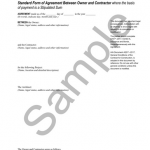
The A101® – Standard Form of Agreement Between Owner and Contractor establishes the financial terms of your project.
It defines:
- Contract sum
- Retainage
- Schedule of values
- Progress payments
- Substantial completion
These terms shape cash flow, risk exposure, and insurance costs. The agreement also includes Exhibit A, which defines insurance and bonding requirements.
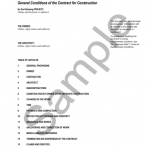
The A201® – General Conditions of the Contract for Construction provides the operational framework that governs how the project runs.
Together, A101 and A201 form the core contract.
How Bonds Strengthen Your Protection
Bond agreements reinforce the contractor’s obligations outlined in A201 by backing performance, payment, and warranty with surety policies.
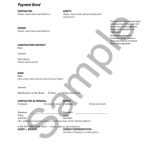
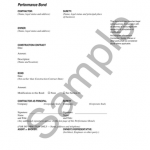
The A312™ Performance Bond and A312™ Payment Bond reinforce contractor obligations during construction. The A313™ Warranty Bond extends protection after completion.
These bonds align with the contract value defined in A101 and provide a surety-backed safety net in the event of issues.
Why Contract Coordination Matters
A101, A201, A312, and A313 are designed to work together. By using a coordinated framework:
- Your financial exposure is defined and controlled.
- Roles and responsibilities are clear.
- Dispute resolution processes are established.
- Performance obligations are enforceable.
When these documents are referenced together in A101, they form a single, enforceable contract framework.
Explore Each Essential Pairing
- A101 + A201: The General Conditions That Govern Your Project
- A101 + A312: Bonds That Protect Against Contractor Default
- A101 + A313: Extending Surety Protection Beyond Construction
The Owner’s Role Across Relationships
You sit at the center of the project:
- Owner ↔ Contractor (A101)
- Owner ↔ Contractor ↔ Project team (A201)
- Owner ↔ Contractor ↔ Surety (A312, A313)
Requiring bonds is not administrative. It is due diligence. A bonded contractor has been evaluated by a surety, providing an additional layer of financial confidence. If the project encounters obstacles, that surety is there to step in as a party legally bound to uphold the contract.
When the contracts that govern these relationships align, owners achieve predictable cost control, enforceable remedies for non‑performance, reduced exposure to subcontractor non-payment, and strong warranty protections.
Variations of A101: A102 and A103
Projects may require different compensation structures. The A102™ and A103™ are variations of the A101, structured around a guaranteed maximum price that caps what you will pay for the project.
- A102™ – Agreement Between Owner and Contractor for Cost of Work Plus a Free With a Guaranteed Maximum Price: You reimburse the contractor for the actual cost of the work. You pay a contractor fee (often a percentage or fixed amount), and the total cost cannot exceed the agreed-upon maximum price unless you approve changes.
- A103™ – Agreement Between Owner and Contractor for Cost of Work Plus a Free Without a Guaranteed Maximum Price: There is no cost ceiling. You pay the actual cost of the work plus the fee, regardless of the total. The contractor has less financial risk, and you take on more cost exposure.
Both still incorporate A201 and rely on coordinated insurance and bonding. And the coordinated framework with A201, A312, and A313 remains the same.
For smaller projects, the abbreviated A104™ or A105™ agreements may be used. They do not include A201 or the same coordinated bond framework.
- A104™ – Abbreviated Agreement Between Owner and Contractor
- A105™ – Short Agreement Between Owner and Contractor
Owner Agreements Built for Predictable Outcomes
From project kickoff to closeout, the right agreements help you align your team, reduce risk, and protect your investment. When used together, A101, A201, A312, and A313 create a coordinated system that protects your capital, clarifies expectations, and keeps your project moving forward. Explore the full library of owner-focused agreements.
Unlimited Access To AIA Contracts
Take the next step, with unlimited use of coordinated, standards-backed agreements across every project at no additional cost.