
Owner Protections: How A101 and A201 Have Your Projects Covered
Before you sign a contract with a contractor, you need to know what’s in the agreement and what is supported by its General Conditions.
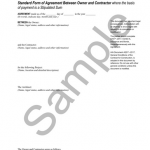
Most projects begin with A101® – Agreement Between Owner and Contractor, and that’s the right place to start. It establishes core business terms, such as the contract value and project schedule. But A101 is intentionally concise. It defines what has been agreed to, not how the work will be carried out.
It doesn’t tell you:
- How changes are handled in real time
- How disputes move from issue to resolution
- How payment gets reviewed and approved
- How responsibilities are carried out during construction
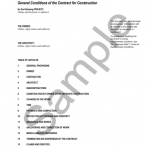
That’s where A201® – General Conditions of the Contract for Construction comes in. General Conditions define the project’s operational rules: who holds authority, how changes are processed, and how disputes are resolved.
Together, A101 and A201 form the Contract for Construction, connecting the agreement to how the job is executed. Construction contracts work best when they are used as a coordinated system, not as standalone documents.
Why A201 Belongs with Every A101 Owner-Contractor Agreement
A101 defines the financial terms of your agreement.
A201 defines how those terms are executed during construction, providing the necessary structure to keep the project moving forward.
Without A201, you won’t have a consistent process for managing the work outlined in A101. For owners, this structure is critical. It creates predictability across the project and ensures that every participant is working under the same set of rules.
How A201 Keeps Your Project on Track
A201 governs your project from kickoff through closeout. The general conditions of your contract set the ground rules for how the work is managed, reviewed, and paid for. A201 establishes:
- How progress payments are reviewed and approved
- How change orders are initiated, evaluated, and executed
- How delays and schedule impacts are addressed
- How defective or nonconforming work is corrected
- How disputes are escalated and resolved
This alignment reduces friction across teams and helps prevent small issues from becoming costly problems.
How A201 Aligns Your Project Team
Construction projects involve multiple parties with different responsibilities. Without a shared framework, misalignment is almost guaranteed. A201 creates that alignment by clearly defining roles:
- The contractor is responsible for executing and coordinating the work, including managing subcontractors, maintaining the schedule, and delivering compliant construction.
- The architect administers the contract, reviews payment applications, evaluates changes, and helps interpret the contract documents during construction.
As the owner, you gain visibility into both roles while maintaining a structured process for oversight and decision-making.
This matters most when things go wrong. If the contractor disputes a payment decision or the architect flags nonconforming work, A201 defines how each situation is handled. The process, not personalities, drives the resolution.
A101 and A201 Reduce Owner Risk
When A101 and A201 are used together, your project operates under a consistent governance model.
That consistency gives you:
- Clear accountability across all parties
- Faster decision-making during construction
- Reduced disputes through defined processes
- Better cost and schedule control
Owners who use AIA standard forms also benefit from decades of use in court. Courts and attorneys are familiar with AIA language, which means disputes, when they do arise, are resolved within a well-understood legal framework rather than custom contract language that may be contested at every turn.
The Owner Protections Built Into A101 and A201
AIA’s standard forms include every protection an owner needs in a contractor agreement. Here’s where each one lives:
- Lien Waivers: Unpaid subcontractors or suppliers can file a lien against your property, even if you paid the contractor in full. A201 lets you require lien waivers before releasing final payment, using G706™ – Contractor’s Affidavit of Payment of Debts and Claims and G706A™ – Contractor’s Affidavit of Release of Liens.
- Retainage: A101 lets you hold back a percentage of each payment until the work is substantially complete, giving you financial leverage if the contractor fails to finish or correct defects.
- Change Order Controls: A201 establishes a formal process for initiating, pricing, and approving changes before work proceeds. This process includes the G701™ – Change Order. Work done without a signed change order is generally not your financial obligation.
- Dispute Resolution: A201 Article 15 establishes a structured process for resolving disputes without anyone jumping straight into legal action.
- Legal Protection: A201 requires the contractor to take responsibility for claims arising from their own work, so the liability doesn’t become your problem.
A101 and A201 include all these protections in coordinated, industry-standard language refined over decades of use across the construction industry.
Before You Sign: A Quick Owner Checklist
Not every contractor agreement includes the same protections. Before signing any owner-contractor agreement, ask:
| ✅ | Do all participants understand how the contract is administered during construction? |
| ✅ | Are roles clearly defined across owner, architect, and contractor? |
| ✅ | Are payment, change order, and dispute processes aligned? |
| ✅ | Are procedures in place for defective work? |
| ✅ | Are lien waiver requirements in writing? |
| ✅ | Is there a defined dispute resolution process? |
If any of these are missing, A101 and A201 address all of them with language familiar to lenders, insurers, and attorneys across the industry.
Create a Coordinated System
A101 and A201 are the foundation of every standard owner-contractor relationship.
For added protection, owners can pair A101 and A201 with A312™ Payment and Performance bonds to cover contractor performance and payment obligations, and A313™ for warranty coverage after construction closes out.
Together, these documents give you the structure your project needs from contract through closeout.
Ready to take the next step?
Get unlimited use of coordinated standardized agreements across every project.