What Every General Contractor Needs to Know About Contracts
 As a general contractor (GC), your contracts drive everything from how you get paid to how you manage change and risk. AIA Contract Documents partners with 88% of ENR 400 firms on 200,000 projects annually. We understand how the right contracts help you protect your cash flow, clarify scope, and keep projects moving. That is how you build smart.
When agreements are unclear, you feel it fast. Payment slows down. Scope expands without clarity. And disputes take time away from work. This guide breaks down what matters most in general contractor agreements, how AIA Contract Documents support your workflow, and what top-performing firms do to stay ahead.
- Contracts directly impact your cash flow, risk exposure, and project execution.
- Clear scope and change order processes prevent margin loss.
- Standardized agreements reduce disputes and speed up workflows.
- Payment applications and documentation must align with contract terms.
- Using AIA Contract Documents helps you follow proven, widely adopted standards.
Section 1: AIA Contracts Overview

General Contractors Are at the Center of Contracting
General contractors manage the largest volume of agreements, forms, and project documentation across the job. You coordinate trades, suppliers, and consultants, while also managing payment applications and documentation flowing in both directions.
Because of this complexity, misalignment between documents is one of the fastest ways to lose time, leverage, and margin. Small inconsistencies compound quickly across teams and work phases. From your point of view, contract alignment is not optional; it is operational.
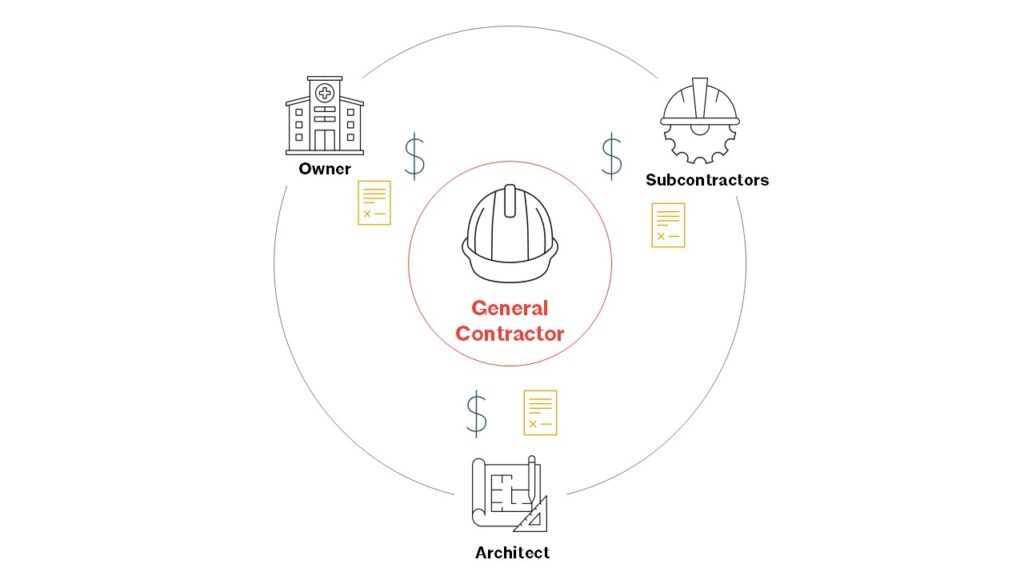
Contracting in construction spans a range of agreements (A-Series) and billing forms (G-Series). The primary agreement between you and the owner sets the tone for the entire job. General Conditions (A201®) govern all architect, subcontractor, and consultant agreements, helping to define rights, responsibilities, and relationships across parties.
How AIA Contract Documents Work Together
Contracts help you bring the architect’s vision to life while meeting the owner’s needs and protecting your bottom line.
AIA Contract Documents are designed as a coordinated system. They align across delivery methods, roles, and project phases, creating consistency from the primary agreement through payment, substantial completion, lien waivers, and closeout.
AIA Contract Documents are written with the guidance of a 35+ member Documents Committee, including contractors, owners, architects, attorneys, and insurance professionals from the AEC industry. Their collective expertise leads to agreements that are widely recognized and rooted in real-world practice.
Each document bearing the official AIA seal serves a specific purpose, but they are intended to work together. When used correctly, they create a shared framework that aligns expectations across the project team. This alignment becomes especially important as projects grow in complexity.
Section 2: Anatomy of a Construction Contract

Key Elements of a Construction Contract
Every construction contract includes a core set of elements that define how the project operates. Understanding these basics helps you avoid issues and manage projects more effectively.
General Information
Identifies the parties to the agreement, including the owner, architect, and contractor, the project location, and designated representatives authorized to act on each party’s behalf.
Project Timeline
Defines when work can begin, when substantial completion is expected, and what level of work will be completed.
Contract Value
This section uses pricing tables to define the total value of the construction contract and varies based on the payment method.
Stipulated Sum
Establishes a fixed contract amount. Incentives or bonuses can increase the contract sum for early completion or strong performance.
Cost of Work Plus a Fee with a Guaranteed Maximum Price (GMP)
Establishes active cost controls throughout the project. The general contractor’s fee is clearly defined and tracked separately from job costs. The contract tightly defines what qualifies as reimbursable. The contract requires open-book accounting, detailed cost records, and audit rights during and after construction.
Cost of Work Plus a Fee Without a Guaranteed Maximum Price (GMP)
The contract sum is based on the actual cost of the work plus a clearly defined general contractor’s fee, but without a hard cost cap. The contract strictly defines reimbursable costs, requiring open-book accounting, detailed cost reporting, and owner audit rights. The contract relies on a control estimate that is updated throughout the project to track budget, assumptions, contingencies, and projected final cost.
Across All Models
- Alternates give the owner flexibility to make design or material selections later, such as choosing between different flooring or finish options.
- Allowances address cost uncertainty. At the time of contracting, some materials may not yet be selected, so budgets are assigned to specific portions of the work.
- Unit prices define price ranges when work is priced by quantity, such as square footage.
- Liquidated damages set a fixed cost if Substantial Completion is missed, tying financial consequences directly to the project schedule.
Payments
This section defines how and when you will be paid. It outlines the process for submitting payment applications and required approvals before payment is authorized. The continuation sheet lists completed work for that pay period and ties to the schedule of values.
Progress Payments
These help ensure your team is funded throughout the project and that subcontractors and trade partners can be paid on time. They may be subject to a percentage of retainage as permitted by law. The retained amount is withheld from each payment and is released upon substantial completion.
Late Payments
The contract establishes an interest rate for late payments by the owner, encouraging timely payment and supporting consistent cash flow.
Final Payment
Final payment of the remaining contract balance is due once the general contractor has fully performed the work, except for obligations to correct work.
Enumeration of the Contract Documents
This section identifies all documents that form the contract. Only documents explicitly included here are contractually binding. Bidding materials or reference information are excluded unless specifically listed. For GCs, this creates a clear source of truth.
Section 3: General Contractor Documents

General Contractor Agreements: What They Include and Why They Matter
What Is a General Contractor Agreement?
General contractor agreements define how your project operates at a high level. They act as the foundation for how you manage the job day-to-day by establishing expectations for scope, schedule, cost, and coordination.
These agreements typically include:
- Scope of work and responsibilities
- Payment structure and timing
- Project schedule requirements
- Change management process
- Risk allocation across parties
When these agreements are clear, your team can move faster with fewer questions. When they are vague, you spend more time resolving issues than executing work.
Top 4 Ways Contracts Support Your Build
Using a consistent contract framework helps reduce friction. Your team knows what to expect, partners recognize the structure, and you avoid reinventing the process each time.
Contracts also support your build in four key ways:
- Risk Distribution: Well-written contracts keep design risk with the architect, where it belongs. A contract clearly outlines where you take on risk during construction.
- Insurance Protections: The right contract language ensures you secure the required insurance and bonding, safeguarding your business.
- Profitability: Your primary agreement accounts for dynamic material pricing to ensure a construction project is profitable.
- Scheduling: Contracts account for expected delays, like weather and supply chain conditions, so risk isn’t shifted onto you.
Key Clauses Every General Contractor Should Review
These details will shape your day-to-day operations. Make sure all parties understand:
- Payment timing and approval requirements
- Retainage terms
- Conditions for final payment
- Documentation expectations
- Schedule milestones
- Change order procedures
Section 4: A-Series Agreement

General Contractor’s Responsibilities Under General Conditions
The A201® – General Conditions of the Contract for Construction govern design-bid-build projects, defining how the owner, contractor, and architect interact throughout the life of the job. Understanding the A201 is essential because it establishes the rules of engagement that control execution, coordination, and accountability across the project.
A201 defines the general contractor’s responsibilities across the construction lifecycle. Work includes all construction activities and services, as well as the labor, materials, equipment, and coordination required to complete the project.
- Means, Methods, and Site Control: The GC controls how the work is built, including sequencing and coordination, and is responsible for jobsite safety.
- Labor, Materials, and Subcontractors: The GC provides qualified labor and proper materials, pays subcontractors, and is responsible for subcontractor performance.
- Schedules and Submittals: The GC prepares and maintains the construction and submittal schedules, and coordinates shop drawings, product data, and samples for review.
- Code Compliance and Legal Requirements: The GC complies with all applicable laws, codes, permits, and inspection requirements.
- Tests and Inspections: The GC coordinates and pays for required tests and inspections. Certifications for passing work are provided. If not, the GC is responsible for promptly fixing non-conforming work.
- Safety, Protection, and Use of Site: The GC is responsible for protecting their people, managing site safety, and keeping the project site orderly.
- Changes, Delays, and Hidden Conditions: To preserve rights to time or cost adjustments, the GC follows defined procedures for changes, concealed or hazardous conditions, and work suspensions.
- Damage and Loss Responsibility: The GC promptly remedies damage caused by operations, subcontractors, or anyone they are responsible for.
- Warranties: The GC warrants that the work meets contract requirements and is free of defects, with warranties starting at substantial completion and continuing after final payment.
Choosing Your A-Series Agreements
Design-Bid-Build Delivery Method
In a traditional design-bid-build project, the owner works with the architect to complete the design before construction begins. The project is then put out to bid, and you are selected to execute the work.
In this structure:
- You are responsible for construction.
- The architect retains design responsibility.
- Risk is divided between design and execution.
This remains one of the most common delivery methods in the industry.
How The Architect Supports Construction
In design-bid-build models, the architect supports the GC by interpreting the contract documents and confirming work aligns with the approved design. They review submittals and shop drawings, and issue change orders when design adjustments are needed.
The architect will review and certify your payment applications to confirm that work has progressed as shown. Their certification does not guarantee quality or accept responsibility for construction.
The architect also certifies substantial completion, verifying that the project meets the contract requirements for occupancy and use. This triggers key milestones such as retainage release and project closeout.
Payment Models and Financial Risk
Within any delivery method, payment structure plays a critical role. The way your contract defines compensation directly impacts your financial risk and project performance.
| Payment Model | Description | Risk Profile |
| Stipulated Sum (A101) | Fixed total contract value | Higher GC risk if scope is unclear |
| Cost Plus with GMP (A102) | Cost tracking with a maximum limit | Balanced risk with cost controls |
| Cost Plus without GMP (A103) | Owner assumes cost variability | Lower GC risk, higher owner risk |
Which payment model is used the most? Industry data shows this breakdown of payment methods:
- 81% stipulated sum
- 14% cost plus with GMP
- 5% cost plus without GMP
Other Contracting Roles Your Firm May Perform
Your role on a project is not always limited to general contracting. Different delivery methods change your responsibilities, risk exposure, and contract structure.
Design-Build Delivery Method
According to FMI’s 2024 Design-Build Utilization Study (published 2025), design-build projects are projected to account for $2.6 trillion in construction spending from 2024-2028 and represent 47% of U.S. construction spending by 2028.
In the design-build model, you take on responsibility for both design and construction. The owner contracts directly with your firm under A141™ – Agreement Between Owner and Design-Builder.
This increases your control over coordination and decision-making, but it also increases your risk. Design performance, code compliance, and execution are all tied together. Design-build can accelerate timelines and improve collaboration, but it requires stronger internal coordination.
Construction Management Roles
Construction management introduces flexibility in how you engage with the project. Here are two ways you can be involved as a construction manager.
Construction Manager as Constructor (CMc)
As a CMc, you are involved early in the project and later take on construction risk. You provide preconstruction services, budget alignment, and schedule planning.
Common agreements include:
- A133™ – Agreement Between Owner and Construction Manager as Constructor (CMc) With Guaranteed Maximum Price
- A134™ – Agreement Between Owner and Construction Manager as Constructor (CMc) Without Guaranteed Maximum Price
- A135™ – Agreement Between Owner and Construction Manager as Constructor (CMc) for Collaborative Project Delivery With Guaranteed Maximum Price
Your early involvement increases influence, but also increases responsibility.
Construction Manager as Advisor (CMa)
As a CMa, you act in an advisory role to the owner. You provide cost estimating, scheduling guidance, and constructability input. You do not take on construction risk.
This role is supported by:
Special Considerations and Alternative Agreements
Not every project fits a standard structure. AIA Contract Documents include options for different project types and relationships.
Residential and Small-Scale Projects
For residential work, agreements are tailored to different expectations and project sizes.
- A110™ covers custom residential projects.
- A111™ is for the construction of a single-family home.
- A112™ is for the design and construction of a single-family home.
- A113™ is appropriate for single-family home remodeling and renovations.
For smaller or less complex projects:
Integrated and Specialized Delivery Methods
Some projects require more collaborative or specialized approaches.
- Integrated Project Delivery (IDP): Shared risk and collaboration across parties.
- Volumetric Modular Construction: Off-site fabrication with unique logistics.
- Master Service Agreements: Ongoing relationships with repeat work orders.
These structures support different project needs but require careful coordination.
Drawings and Digital Models as Contractual Instructions
As the industry continues to evolve, Building Information Modeling (BIM) plays a larger role. Drawings are not reference materials; they are binding instructions that guide execution in the field. Your team relies on these documents to plan schedules, procure materials, coordinate subcontractors, and execute the work.
BIM data-rich models show how systems interact and can improve coordination. In this case, G203™ – BIM Execution Plan defines how models are shared and managed across the project.
Delivery Method Comparison Table
Delivery Method | GC Role | Relevant Documents | Risk Level | Key Benefit |
Design-Bid-Build | Builder | A201 | Moderate | Clear role separation |
Design-Build | Builder + Designer | A141 | Higher | Faster coordination |
CMc | Early + At Risk | A133, A134, A135 | Medium-High | Influence over design |
CMa | Advisor | A132 + A232 | Lower | Limited risk exposure |
Section 5: Contractor-Subcontractor Agreements

Contractor-Subcontractor Agreements: Aligning Scope and Reducing Risk
For general contractors, subcontract agreements extend your contract obligations to the rest of the team. This is important when, on average, construction projects involve documents, according to AIA Contract Documents data.
The A401™ – Agreement Between Contractor and Subcontractor translates your commitments to the owner into enforceable responsibilities at the trade level. When aligned with A101 and A201, A401 helps ensure that scope, schedule, insurance, indemnity, and dispute resolution requirements are consistent among all parties.
Why Alignment With the Prime Contract Matters
When subcontract terms do not match your agreement with the owner, you may take on unnecessary risk. This often shows up in disputes, delays, or unrecoverable costs. Alignment ensures that responsibilities flow consistently across the project.
How To Define Scope Clearly for Subcontractors
A clear scope definition is one of the most effective ways to prevent issues. Each subcontract should outline exactly what is included, what is excluded, and how coordination will happen. When the scope is unclear, rework increases, and accountability decreases.
Contracts also support performance by defining expectations for schedule, quality, and documentation. When expectations are documented, it becomes easier to hold teams accountable.
Section 6: Insurance and Bonding

Why Insurance and Bonds Are Critical in Construction
Construction sites involve heavy equipment, multiple trades, and inherently hazardous conditions. In construction, insurance coverage and bonding are so critical that they are addressed in a dedicated exhibit to the contract.
A101®, Exhibit A, Insurance and Bonds, defines who is responsible for carrying out which policies. All project insurance policies should be shared among the owner, general contractor, and key stakeholders, so coverage, responsibility, and risk allocation are clearly understood before work begins.
What Policies Are the Owner Responsible For?
The owner is responsible for maintaining certain insurance coverage that protects the project.
- General Liability Insurance: The owner maintains their standard general liability coverage, which applies to ownership-related risks and exposures outside of the GC’s control.
- Property Insurance: Also known as Builder’s Risk insurance, this policy covers physical loss or damage to the project during construction, including damage caused by fire, theft, vandalism, weather, or accidental damage. Coverage stays in place through substantial completion, when the owner takes occupancy, and insurance responsibilities change.
- Insurance for Existing Structures: If the project involves renovation or an addition to an existing structure, the owner insures the existing building against physical loss or damage through the correction period.
The owner and GC should also consider optional owner coverage depending on project risk, financing, or operational needs. This may span from loss-of-use insurance to cybersecurity policies.
What Policies Are the General Contractor Responsible For?
A101®, Exhibit A, Insurance and Bonds, defines how existing and new insurance policies apply to a specific project. One of your first obligations is to provide the owner with Certificates of Insurance (COIs).
Your existing commercial general liability will name the owner, architect, and the architect’s consultants as additional insureds for claims during the project.
You are also responsible for carrying project-specific insurance that protects against jobsite risk:
- Commercial General Liability: Covers bodily injury, property damage, completed operations, and your contractual indemnity obligations.
- Automobile Liability: Covers vehicles used on the project.
- Workers’ Compensation: Covers employee injuries within statutory limits.
- Employers’ Liability: Covers employee injury claims.
Depending on the project’s location, scope, and risk profile, additional insurance coverage may be required, including:
- Professional Liability Insurance for Design-Build Projects
- Pollution Liability Insurance
- Asbestos Abatement Liability Insurance
- Transit and Storage Insurance
- Contractor’s Equipment Insurance
- Railroad, Maritime, or Aviation Coverage
Additionally, under the general conditions, a Waiver of Subrogation prevents the owner, contractor, architect, and their insurance companies from countersuing one another for property damage covered by insurance. This provision most often arises in fire-related losses.
Performance and Payment Bonds
In addition to insurance, general contractors are often required to provide performance and payment bonds.
- A312™ – Payment Bond and A312™ – Performance Bond provide the owner with financial assurance that you will complete the project as required and that subcontractors, suppliers, and laborers will be paid for their work.
- A313™ – Warranty Bond extends protection beyond completion by guaranteeing that the general contractor will honor warranty obligations under the contract.
How General Contractors Manage Risk with Contracts
Risk in construction is unavoidable, but it can be managed. Contracts provide the framework that controls how risk is distributed and addressed.
How Contracts Reduce Construction Risks
Most risks come from unclear scope, poor documentation, or misaligned expectations. These issues often start small but can escalate quickly if not addressed early.
Clear contracts define responsibilities and provide a structured way to handle changes, payments, and disputes. They create a shared understanding across the project team.
Common Risks and Contract Solutions
Risk | Cause | Contract Solution |
Payment delays | Poor documentation | Standardized pay apps |
Scope creep | Vague scope | Clear scope definition |
Disputes | Misalignment | Consistent agreements |
Section 7: Payments, Liens, and Changes

Payment Applications for Contractors: How To Get Paid Faster
Payment applications are the mechanism that keeps cash moving through your business. They translate completed work into approved revenue. When your process is consistent, payments move faster. When it is not, delays build and impact your operations.
What Is a Construction Payment Application? G702 and G703 Explained
Payment applications help you maintain a steady flow of revenue. Standardized forms provide a clear structure for submitting and reviewing payment requests. They allow all parties to see progress, verify work, and approve payments with confidence.
Key AIA pay app forms include:
Best Practices for Faster Payment Approvals
Delays often come from inconsistent documentation, missing details, or misalignment with contract requirements. Over time, even small inefficiencies can create significant cash flow pressure.
The most effective contractors treat payment applications as a repeatable process. They submit complete, consistent, and well-documented requests every time. This reduces back-and-forth and builds trust with owners and architects.
The Lien Process and Protecting Payment
Lien management protects your right to be paid. For GCs, lien documentation does three critical things:
- Confirms that subcontractors and suppliers are being paid.
- Prevents surprise lien claims late in the project.
- Gives owners the confidence to release progress and final payments.
Throughout construction, lien waivers are tied directly to payment applications.
- G901™ – Generic Conditional Waiver and Release on Progress Payment: Supports progress payments by acknowledging payment is expected but not yet received.
- G902™ – Generic Unconditional Waiver and Release on Progress Payment: Riskier option because it’s not conditioned upon the contractor’s receipt of a future payment.
- G903™ – Generic Conditional Waiver and Release on Final Payment: Used at final payment to conditionally release remaining lien rights once all funds are paid.
- G904™ – Generic Unconditional Waiver and Release on Final Payment: Used at final payment to unconditionally release remaining lien rights once all funds are paid.
As the project approaches completion, the general contractor formally certifies that funds have flowed properly through the job with these agreements:
- G706™ – Contractor’s Affidavit of Payment of Debts and Claims: Confirms that subcontractors, suppliers, and labor have been paid.
- G706A™ – Contractor’s Affidavit of Release of Liens: Affirms that required lien waivers have been collected.
- G707™ – Consent of Surety to Final Payment: Used if the project is bonded to document the surety’s consent to final payment, often a prerequisite to release remaining funds.
Managing Changes Through Contracts
Change orders are critical tools for general contractors because they protect payment, schedule, and risk when the scope of work changes.
- G701™ – Change Order: This formally documents changes agreed to by the owner, contractor, and architect, ensuring that cost and time adjustments are approved before the work proceeds.
- G714™ – Construction Change Directive: This is issued when an agreement can’t be reached right away, allowing the owner to direct the work to continue while pricing or schedule impacts are resolved.
Key AIA Payment and Change Documents
Purpose | Document | What It Does |
Payment | Summary payment application | |
Payment | Detailed cost breakdown | |
Changes | Formal change order | |
Changes | Directive for immediate changes |
Section 8: Contract Technology

Construction Contract Management Software for General Contractors
The administrative burden on a general contractor during contracting is significant, from managing multiple subcontract agreements to processing monthly pay applications.
Managing contracts across disconnected tools creates inefficiencies and increases risk. Technology helps you standardize workflows and maintain visibility across your projects.
Benefits of a Centralized Contract Workflow
A centralized platform allows you to manage contracts, track progress, and maintain a clear audit trail in one place. This improves speed, accuracy, and team alignment.
Catina is AIA Contract Documents’ web-based contracting platform that streamlines drafting, management, and finalization of construction agreements and payment applications in a collaborative workspace.
For example, it’s a powerful tool for day-to-day time savings and consistency:
- Subcontract Templates: Build a project-specific subcontract agreement once, then reuse it across trades with copied project details and minimal edits per subcontract. Consistent terms reduce errors and speed up issuance, while version control and transparent redlining reduce administrative risk.
- Pay Application Automation: Set up pay applications once for each payment stream that can automatically carry forward contract values, retainage, and Continuation Sheets each month. Monthly pay apps can be completed in under an hour. Existing spreadsheets can be imported and converted into usable forms, eliminating duplicate data entry.
Build Smarter With Better Contracts
Your contracts shape how your projects run, how you get paid, and how you manage risk across every phase of construction.
When you use clear, standardized agreements, you create consistency across your projects. You reduce confusion, improve communication, and keep working without unnecessary delays.
For general contractors, the goal is straightforward:
- Protect your cash flow
- Document your work and changes
- Align your team from start to closeout
- Reduce disputes before they happen
AIA Contract Documents give you a standards-backed foundation to do exactly that. They help you work with confidence, knowing your agreements reflect how real projects operate.
As your projects grow in size and complexity, your contracts become even more important. The contractors who perform best are those who treat contracts as part of their workflow, not just paperwork at the start of a job.
When your contracts are clear, your processes are consistent, and your documentation is strong, you spend less time managing problems and more time delivering projects.
That is how you build smart.
Put Better Contracts to Work Across Every Project
Standardized contracts are only as effective as your ability to use them consistently. When your agreements, workflows, and payment processes live in one place, you turn best practices into everyday execution. With Catina and AIA Contract Documents, you can apply the same proven standards across every subcontract, pay application, and project, without adding administrative overhead.
The result is a more connected workflow, stronger documentation, and greater control from preconstruction through closeout.
Frequently Asked Questions

General Contractor Contracts FAQs
Your primary agreement with the owner, along with its General Conditions, defines payment, scope, and responsibilities. It sets the foundation for the entire project.
Contractors submit progress payment applications based on completed work for a given period. These are reviewed and approved according to the contract terms.
They are standardized, widely adopted agreements designed to reflect real construction workflows and reduce risk, upheld in court for over a century.
Change orders document scope changes, including cost and schedule impacts, and require approval before work proceeds.
Yes. Alignment ensures consistency and reduces risk across the project.