OVERVIEW
SKL Architects delivers community-focused design projects across Seattle. To streamline construction administration and payment processes, the firm implemented AIA Contract Documents (ACD). Standardized forms help manage contractor payment applications and maintain organized project documentation.
Why Standardized Payment Forms Improve Construction Administration
Payment documentation plays a critical role in construction administration. Standardized forms help architects review payment requests consistently and ensure accurate documentation across projects.
CHALLENGE
Managing Contract Complexity and Payment Workflows
Construction contracts play a critical role in managing project relationships, but unclear or inconsistent documentation can slow project workflows.
As SKL Architects managed multiple projects and coordinated with various contractors and consultants, the firm identified the need for a more consistent approach to contract administration. Payment applications required careful review and documentation to ensure that contractors and consultants were paid accurately and on time.
Without standardized documentation, these processes could become time-consuming and difficult to manage across projects. Improving contract clarity and simplifying payment workflows became an important priority for the firm.
America Fiol-Serra
Contracts Manager, SKL Architects
“Moving to ACD has been a true game-changer for our business and using them has helped our business grow exponentially.”
SOLUTION
Standardizing Contract Administration with ACD
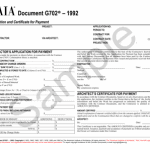
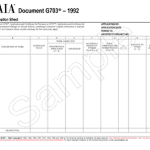
To improve efficiency and consistency, SKL Architects implemented ACD to support its contract administration processes. The firm began regularly using:
These documents established a clear and consistent process for reviewing and certifying contractor payment applications while maintaining accurate documentation throughout the construction phase.
America Fiol-Serra
Contracts Manager, SKL Architects
“We use G702 and G703 quite frequently, and since becoming ACD users, these documents have become staples in our projects.”
ACD also made it easier for the firm to identify and select the appropriate contract documents for each situation. Because contractors and consultants were already familiar with the documents, the use of standardized agreements helped streamline coordination across project teams.
America Fiol-Serra
Contracts Manager, SKL Architects
“The way ACD indexes the contracts makes finding what you’re looking for easy. As each document is summarized, there’s no guesswork ensuring you choose the right product for the job.”
RESULTS
Improving Efficiency, Collaboration, and Organization
After implementing ACD, SKL Architects strengthened its contract workflows and improved coordination with project partners.
- Improved operational efficiency. Standardized contracts reduced administrative complexity and simplified internal processes.
- Stronger industry collaboration. Familiar contract formats helped contractors and consultants work from a shared understanding of expectations.
- Better document organization. ACD allowed the firm to maintain a structured contract library, making it easier to reference agreements and manage documentation across projects.
By using standardized contract frameworks, SKL Architects created more efficient processes for managing construction administration while improving transparency across its projects.
America Fiol-Serra
Contracts Manager, SKL Architects
"ACD has had a dramatic impact on our overall efficiency levels and frees us up to focus on other areas of our business.”
ACTIONABLE INSIGHTS
Key Takeaways for Architecture Firms
SKL Architects’ experience highlights several important considerations for architecture firms looking to improve their contract processes and project workflows.
- Structured payment documentation protects project partners. Using tools such as G702 and G703 helps establish a consistent process for reviewing and certifying contractor payment applications.
- Standardized contracts improve project coordination. When architects, contractors, and consultants work from a familiar contract framework, projects move forward with fewer misunderstandings and clearer expectations.
- Operational efficiency supports business growth. Reducing administrative complexity enables architecture firms to focus more on project delivery, client relationships, and strategic growth.
- Industry-recognized contract documents build trust. When project partners already understand the contract format and structure, collaboration becomes easier and more predictable across the project team.
- Use standardized payment application forms. Documents like G702 and G703 help architects review and certify contractor payment applications efficiently.
Gain access to the full library of standards-backed agreements used across the design and construction industry.