Guide

A Guide to Construction Contract Management in the AEC Industry

Table of Contents

Build With Fewer Project Surprises, From Design Through Closeout

A guide to construction contract management in the aec industry 1

Every construction project runs on contracts. They define how teams work together, how risk is shared, and how decisions are made when conditions change.

When contract management consists of disconnected documents and manual processes, teams often experience delays and confusion. These issues may seem manageable early on, but they can add up and create downstream problems that are harder to resolve.

A more effective approach is to manage contracts within a connected contract management system that supports how projects operate from start to finish. This guide explains what a contract management system is, why you need one, and best practices for use in the Architecture, Engineering, and Construction (AEC) industry.

Key Takeaways
  • Construction contract management is a coordinated system that impacts every phase of a project.
  • Disconnected files and manual processes create delays and increase risk across teams.
  • A contract management system brings together standardized agreements and finalization workflows to improve coordination and visibility.
  • Consistency across contracts and stakeholders is one of the most effective ways to reduce disputes and keep projects on track.
  • AI enables you to move faster through contract drafting and deepen your understanding.

Section 1: The Construction Contract Workflow

A guide to construction contract management in the aec industry 2

How Contracts Shape Work Across the Project Lifecycle

Contracts are active at every phase of a construction project and impact all parties.

  • Architects rely on contracts to define the program requirements and protect design intent.
  • General contractors depend on them to coordinate execution and payment across teams.
  • Subcontractors use contracts to define their scope and ensure clarity in the field.
  • Owners rely on them for project oversight and risk management.

Because contracts influence decisions at every stage, they must remain coordinated and aligned with all stakeholders.

What Is Construction Contract Management?

Construction contract management is the process of creating, managing, and tracking agreements across the full project lifecycle, from initial design through final closeout. It ensures that scope, responsibilities, risk, and payment terms are clearly defined and consistently applied across all project stakeholders.

This includes coordination between architects, general contractors, subcontractors, consultants, and owners. When implemented effectively, contract management helps reduce disputes, improve project coordination, and keep work moving on schedule.

The Risks of File-Based Contract Management

Poor file management and disconnected workflows are a major source of project inefficiency in construction. Many teams still manage contracts through shared drives, PDFs, and email. While this approach may work on smaller projects, it introduces risk as complexity increases.

Without a connected contract management system, teams spend time searching for the latest version, tracking approvals manually, and reconciling differences between agreements. Changes are harder to follow, and alignment between stakeholders begins to slip.

These breakdowns introduce friction into the workflow and increase the likelihood of delays and disputes. Contracts should move with the project, not sit outside of it.

Pro Tip If your team is asking which version is final, your contract process is not connected.

Section 2: Using a Contract Management System

A guide to construction contract management in the aec industry 3

What Is a Contract Management System?

A contract management system combines standardized contract templates with workflows that guide you from the first draft to revisions, approvals, and final signature. Rather than simply storing documents, a contract management system connects people, processes, and contract data in one structured environment.

Typical capabilities include:

  • Structured drafting within standardized agreements
  • Customization options to save personalized templates
  • Built-in change approval and e-signature workflows
  • Time-stamped revision control and audit recording of every change
  • Centralized access across teams and projects
  • Integrated execution and status tracking

Why Top AEC Firms Use a Contract Management System

Instead of managing contracts as isolated documents, a contract management system creates a connected workspace where teams manage contracts as part of an integrated process. That’s why over 92% of top ENR firms use one.

Create a Predictable Process for Contract Administration

After you select the right agreement, contracts move through drafting, review, negotiation, approval, execution, and ongoing administration. This improves coordination across stakeholders, reduces delays caused by version confusion or unclear responsibilities, and creates a more predictable path from project kickoff through closeout.

For architects, this means drafting a B101™ – Agreement Between Owner and Architect once and managing all edits, approvals, and redlines in one place rather than across email threads. For general contractors, it means building a subcontract template for a project and reusing it across every trade with minimal edits, while automated pay applications carry forward contract values and retainage each month. For owners, it means having a clear audit trail of decisions and obligations across all agreements without chasing down the latest version.

Pro Tip If your system only stores documents but does not manage drafting, review, approvals, and execution, you are still relying on manual contract management.

Section 3: Standardizing Construction Contracts

A guide to construction contract management in the aec industry 4

Standardized Contracts Create Faster Alignment

Misaligned agreements are a huge source of early project delay. When stakeholders rely on different templates, heavily modified language, or internally developed contracts, teams spend valuable time reconciling structure and terminology instead of focusing on project delivery.

Standardized construction contracts create a shared foundation that improves clarity around scope, responsibilities, compensation, and risk allocation from the outset. Because AIA agreements are already widely recognized across the industry, teams can move more quickly into project-specific discussions rather than debating the basic structure.

Why Coordination Between Agreements Matters

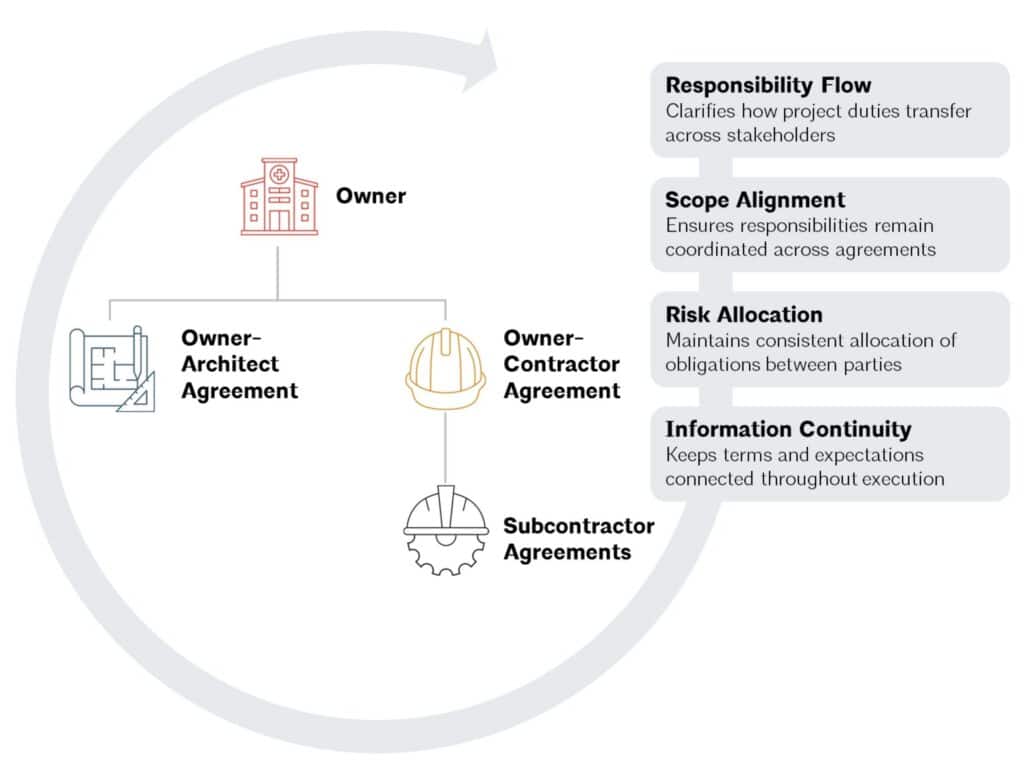
Consistency becomes even more important across connected agreements. Owner-architect, owner-contractor, and subcontractor relationships must work together as a coordinated system. When contracts are developed independently or modified inconsistently, gaps in scope, responsibilities, and risk allocation often emerge during execution.

Construction Contracts Function as a System
A guide to construction contract management in the aec industry 5

A contract management system helps maintain alignment by ensuring agreements are drafted, reviewed, and managed using the same structured process. Standardized contract families help teams reduce inconsistencies and improve coordination throughout the project lifecycle.

For owners and architects, this supports clearer project oversight and scope definition. For contractors, it creates better alignment between upstream and downstream agreements and reduces time spent resolving conflicts during execution.

Standardizing the Full Contract Lifecycle

Why Document Editors Matter in Construction Contract Workflows

Construction contracts involve a high volume of stakeholders, revisions, and dependencies. Legal teams, project managers, finance teams, and external partners all interact with the same documents, often under tight timelines.

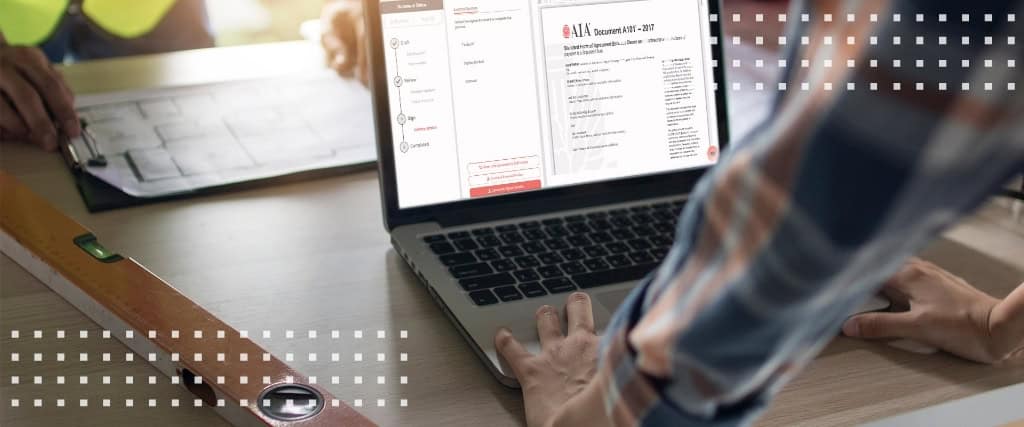
That’s where a contract editing tool is key. A document editor within a contract management system provides a collaborative environment that supports multiple stakeholders, maintains accuracy across versions, and provides visibility into every contract change that impacts contractual risk.

This creates a single, reliable source of truth for agreements, ensuring that every edit is tracked, the latest version is accounted for, and every stakeholder can engage with confidence. For organizations managing construction contracts, the document editor is the operational layer where clarity, speed, and confidence are either gained or lost.

Different stakeholders interact with contracts in different ways, but all rely on a shared editing environment to stay aligned. Legal teams manage risk through structured redlining and clear visibility into changes. Project teams review agreements in context before execution to ensure alignment with field operations. Finance teams reference finalized terms tied to payment workflows and compliance requirements.

How a Document Editor Standardizes Across the Lifecycle

A document editor helps standardize and simplify every stage of the contract lifecycle.

  • Drafting: Teams can create agreements efficiently using a standard library of documents, customized templates, and standardized language.
  • Negotiation: Stakeholders collaborate directly within the document, using redlining and comments to align on terms.
  • Review and Approval: Clear visibility into changes enables faster internal review and reduces bottlenecks.
  • Execution: With integrated workflows, contracts can move seamlessly from final edits to signature.
  • Ongoing Reference: Executed agreements remain accessible and usable throughout the lifecycle of the project.

For AEC firms that adopt a contract management system, the document editor is a foundational component where critical decisions are documented, risks are negotiated, and agreements are finalized.
Section 4: Contract Management Best Practices

A guide to construction contract management in the aec industry 6

Building a Consistent Contract Workflow

A contract management system delivers the most value when organizations apply consistent processes across projects, teams, and stakeholders. Defining standardized workflows for your team to execute in platform improves coordination, clarifies responsibilities, and creates a scalable approach to managing contracts throughout the project lifecycle.

Standardize Processes Before Scaling

Without a shared framework, teams often develop their own document practices and workflows, making coordination more difficult and reducing consistency across the organization. Over time, these variations create operational inefficiencies and increase administrative risk.

Standardization creates a reliable foundation that helps teams work more efficiently while still allowing flexibility for project-specific requirements.

Establish standardized agreements, templates, approval paths, and review procedures before expanding usage across teams, offices, or projects.

Build Repeatable Workflows Across Projects

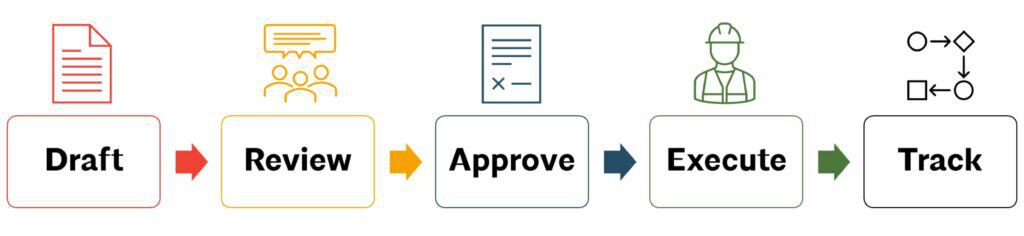
Instead of recreating workflows for every project, organizations can establish consistent processes for drafting, review, approval, execution, and tracking.

Step 1: Create Custom Templates

Create a template that has versions of the standard language with your company’s boilerplate copy, custom clauses, branded information, and specific risk management requirements. This accelerates document set up and keeps your team aligned with your unique business requirements across projects.

Step 2: Build Project Manuals

Do you have standard cover sheets, marketing materials, or branded content you want to include with every agreement? Add those external documents to your repository to combine with forms and agreements for polished deliverables.

Step 3: Build Your Book of Business

Use built in organization and contact management tools to apply consistent details for project participants and high-volume business partners. Configuring your address book ensures party information is accurate and consistent on all contracts and forms.

These repeatable workflows reduce setup time, improve quality control, and create a more predictable experience across teams and offices. Standardized workflows also simplify onboarding and training by creating clearer expectations around how contracts move through the organization.

Pro Tip If everyone owns everything, no one owns anything.

Maintain Oversight Throughout the Project Lifecycle

Contracts govern the entire project, and it’s critical to maintain oversight throughout design, construction, and closeout to help teams stay aligned. Many firms use more than 40 documents and forms over a project’s lifecycle, so manual management quickly becomes unsustainable.

A centralized system enables project owners to retrieve information from governing agreements, such as milestone dates, notice requirements, dispute processes, and more. You can quickly surface details when they become applicable to the project stage.

Centralized systems also preserve continuity across project phases, reducing the need to recreate information and improving coordination between stakeholders. Teams can make decisions based on accurate information instead of relying on fragmented records or outdated documents.

For owners, this provides stronger oversight across projects. For contractors, it improves operational control during execution. Across all stakeholders, it supports smoother delivery, cleaner closeouts, and a more complete record of project decisions.

Example Workflow for Contract Management Throughout the Project Lifecycle
A guide to construction contract management in the aec industry 7

Section 5: AI in Contract Management

A guide to construction contract management in the aec industry 8

How AI Supports Construction Contract Workflows

The most effective use of AI is within the workflow that surrounds contracts.

When embedded in a contract management system, AI can guide users at key moments, such as:

  • Helping select the right agreement
  • Highlighting important provisions during review
  • Improving visibility across related documents

For example, instead of manually searching through a complex agreement, you can use AI to help you review an indemnification clause or find the details of a notice requirement.

This allows teams to move more efficiently while continuing to rely on trusted, standardized contract content. For architects, contractors, and owners, this balance is important. It preserves the contract integrity, while improving how teams interact with it.

Pro Tip AI delivers the most value when it supports your workflow. The contract itself should remain grounded in trusted, expert language.

Section 6: Key Takeaways

A guide to construction contract management in the aec industry 9

Build a Connected Contract Workflow

Construction projects will always involve complexity. The goal is to manage that complexity in a way that keeps teams aligned and work moving forward. A contract management system connects documents, workflows, and stakeholders into a single process. Teams start from trusted agreements, maintain consistency, and gain visibility across the project lifecycle, leading to stronger collaboration and more predictable outcomes.

Take the Next Step with a Contract Management System

A contract management system brings together standardized agreements, structured workflows, and lifecycle visibility.

With AIA Contract Documents’ contract management system, your team can create a consistent contract workflow across every project and scale how you manage contracts across your organization.

Learn how a connected contract workflow can make it easy to manage project documents.

Frequently Asked Questions

A guide to construction contract management in the aec industry 10

Contract Management System FAQs 

What is construction contract management?

Construction contract management is the process of creating, managing, and tracking contracts throughout the lifecycle of a project. It ensures that scope, responsibilities, risk, and payment terms are clearly defined and consistently applied from design through closeout.

Why is contract management important in AEC projects?

Contract management is critical because it defines how architects, contractors, subcontractors, and owners work together. Strong contract management reduces disputes and helps keep projects coordinated and within budget.

What is a contract management system in construction?

A contract management system is a structured solution that connects contract documents, workflows, and stakeholders in one place. It supports drafting, review, execution, and tracking, helping teams stay aligned across the full project lifecycle.

How is a contract management system different from managing contracts in files?

Managing individual contract files means relying on email, PDFs, and shared drives, which can lead to version confusion and delays. A contract management system provides a connected workflow with version control, visibility, and collaboration built in, reducing risk and improving efficiency.

How do standardized construction contracts improve project outcomes?

Standardized contracts create a shared starting point for all stakeholders. They reduce negotiation time and ensure clarity and consistency across agreements, which helps prevent misalignment and disputes later in the project.

How do I choose the right construction contract?

The right contract depends on the project delivery method, compensation structure, and risk allocation. A contract management system can help guide this decision by matching project needs with the appropriate agreement, reducing guesswork and delays.

What are the benefits of using coordinated contract agreements?

Coordinated agreements are designed to work together across different project roles. This ensures that contract terms remain consistent between owners, architects, contractors, and subcontractors, reducing conflicts and improving project execution.

How does a contract management system reduce risk?

A contract management system reduces risk by standardizing contract language, maintaining alignment across agreements, and providing a clear audit trail of decisions and changes. This improves visibility and helps teams manage issues more effectively.

How can contract management scale across multiple projects?

A contract management system allows organizations to standardize workflows and contract practices across teams and projects. This creates consistency, improves oversight, and helps firms scale without increasing complexity or risk.

When should contract management start and end?

Contract management starts during early project planning and continues through design, construction, closeout, and even into operations. Managing contracts across the full lifecycle helps maintain continuity and reduce issues at later stages.

What is the best way to manage construction contracts?

The most effective way to manage construction contracts is through a contract management system that combines standardized agreements with structured workflows. This approach improves alignment, reduces risk, and supports consistent project delivery across teams.