
When a general contractor or design-builder takes on design responsibility, the contract structure changes. Design-build agreements for construction projects introduce professional liability, standard of care obligations, and coordinated document requirements that standard design-bid-build templates do not address.
If you’re a general contractor or design-builder expanding your scope beyond construction to include design services or the design phase, read on to learn more about the AIA agreements you’ll need for design-build.
What Design Services Mean for a GC or Design-Builder
Your role determines the right agreement. In traditional design-bid-build, the contractor’s role is usually limited to the construction phase.
That all changes in design-build delivery, where one entity, typically a general contractor or design-build firm, is responsible for both design and construction. The owner contracts directly with the design-builder rather than separately hiring an architect and contractor.
Within that structure, the design phase often is its own distinct engagement before construction pricing is finalized.
Why a Standard Construction Agreement Is Not Enough
A standard owner-contractor agreement for the design-bid-build delivery method only covers construction services. Once you add design responsibility, the engagement shifts to a design-build delivery method and also needs to address:
- Responsibility for design accuracy and completeness
- Professional liability tied to design services
- Finalizing the contract sum once the design is nearing completion
- How design changes impact the contract sum and schedule
- What happens if the owner’s criteria change mid-design
- Whether or not you are consulting with an architect or engineer
Without those provisions, gaps form between design obligations and construction obligations, increasing the risk of disputes, scope creep, and uncovered liability.
What To Watch For When Design Services Are Part of Your Scope
Taking on design responsibility changes your obligations. Before signing, review these areas carefully.
Owner’s Criteria and Scope Definition
Under A141, the owner provides criteria that establish the project requirements. The design-builder then develops a preliminary design around those criteria.
If the owner changes those requirements during the design phase, the agreement should address how those changes affect compensation and schedule. Without that structure, design-phase changes can quickly affect margin, schedule, and downstream coordination.
Design Liability
In a construction-only project, the architect typically retains responsibility for design accuracy. In design-build delivery, the design-builder takes on that responsibility.
That shift creates a different liability profile and often requires separate insurance review, risk allocation discussions, and tighter consultant alignment.
Payment Structure for Design Services
Design-build agreements often separate compensation for design and construction phases.
Before work begins, confirm:
- How the design phase is compensated
- What happens to compensation if construction does not proceed
- Who owns and licenses the instruments of service (drawings, models, and specifications your team produced)
Clear payment structure protects cash flow and reduces disputes if the project changes direction.
Common Mistakes GCs Make When Taking on Design Responsibility
Many GCs enter design-build delivery using construction-only assumptions. That creates avoidable risk.
Common mistakes include:
- Using standard construction agreements for design-build work
- Starting design before architect agreements are finalized
- Leaving owner criteria too broad or undefined
- Failing to align architect scope with owner obligations
- Overlooking professional liability exposure
- Treating preconstruction services as informal work
Design-build delivery works best when responsibilities, pricing structure, and design obligations are documented early.
AIA Agreements for Design-Build Projects
A141: Agreement Between Owner and Design-Builder
A141 is the primary agreement for design-build delivery. Use A141 when the owner hires one entity to provide both design and construction services. The design-builder can be a contractor, architect, developer, joint venture, or any entity legally permitted to perform design-build services in that jurisdiction.
A141 is structured in two parts.
- The Agreement: Executed at the outset to establish the relationship, owner’s criteria, and compensation for the design phase.
- Exhibit A – Design-Build Amendment: Executed later, once both parties finalize the contract sum.
This structure allows the project team to begin design development before locking in final pricing.
A145: Abbreviated Agreement Between Owner and Design-Builder
A145™ – Abbreviated Agreement Between Owner and Design-Builder is a shorter version of A141 intended for less complex projects.
Like A141, it includes:
- An initial agreement phase
- A later Design-Build Amendment once the contract sum is established
Use A145 when you need a streamlined design-build agreement but still require coordinated design and construction obligations under one entity.
B143: When the Design-Builder Hires an Architect
B143™ – Agreement Between Design-Builder and Architect governs the relationship between the design-builder and the architect performing design services.
Under this structure:
- The architect works for the design-builder.
- The architect does not contract directly with the owner.
- The architect’s obligations align with the design-builder’s obligations under A141.
This alignment matters. Scope definitions, dispute procedures, and liability provisions should stay coordinated across both agreements.
This differs from B101™ – Agreement Between Owner and Architect, where the architect contracts directly with the owner.
If you hire an architect under B143, align the architect’s obligations with your commitment under A141.
You’ll need to review:
- Scope definitions
- Deliverables
- Schedule responsibilities
- Indemnification language
- Dispute procedures
Misalignment between agreements can create coordination gaps and increase the likelihood of claims.
Progressive Design-Build Agreements
Progressive design-build introduces a phased collaboration process before the final contract price is established.
Instead of fixing the full contract sum upfront, the owner and design-builder collaborate during early design development while pricing evolves alongside the project.
Traditional design-build agreements were not built for phased pricing or progressive transitions. To address that gap, AIA updated its design-build document family in 2024 with agreements specifically structured for progressive design-build delivery, including:
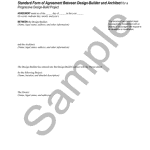
- A141PDB® – Standard Form of Agreement Between Owner and Design-Builder for a Progressive Design-Build Project
- B141PDB™ – Standard Form of Agreement Between Design-Builder and Architect for a Progressive Design-Build Project
The progressive design-build documents address:
- Early-phase collaboration
- Phased pricing
- Design progression
- Transition points between phases
- Shared responsibilities during preconstruction
Start Your Design-Build Project with the Right Agreement
A141, A145, B143, and the full design-build family are included in an AIA Contract Documents unlimited subscription, along with the complete library of coordinated owner-contractor, architect, and consultant agreements if your work spans across different delivery methods
With access to the full document library, your team can standardize workflows, reduce risk, and structure the right agreement before design work begins.
Build smart with standardized agreements built for modern project delivery.
A101® – Agreement Between Owner and Contractor covers construction services only. A141 covers both design and construction, including the pre-amendment design phase, the owner’s criteria process, and the design-builder’s professional responsibilities for the design.
Yes. The design-builder under AIA documents can be a construction contractor, an architect, a developer, a joint venture, or any entity legally permitted to perform design-build services in the relevant jurisdiction.