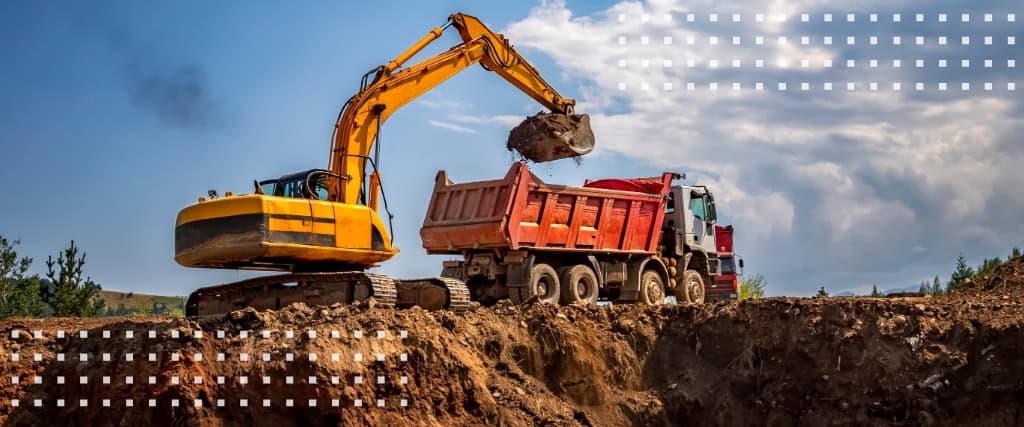
Excavation reveals rock where the borings suggested sand. A crew uncovers an abandoned utility line or an old foundation that no one anticipated. Work slows, and the project team needs to determine what the condition means for cost, schedule, and the next steps.
The response matters: protect the area, notify the required parties, and document what the team found before the condition changes.
Not every unexpected condition justifies a change order. A differing site conditions clause establishes a process for evaluating the discovery, but it does not guarantee an adjustment. The outcome depends on the signed contract, the available site information, and the facts in the field.
Treat a possible differing site condition as a contract administration issue, not just a field problem.
What Are Differing Site Conditions?
A differing site condition (DSC) is a physical condition at a project site that materially differs from what the contract documents indicate or from what the work would ordinarily involve. A201® – General Conditions of the Contract for Construction addresses this in Section 3.7.4, Concealed or Unknown Conditions, in two categories:
- Subsurface or otherwise concealed physical conditions that differ materially from those indicated in the contract documents.
- Unknown physical conditions of an unusual nature that differ materially from those ordinarily found to exist and generally recognized as inherent in construction activities of the character provided for in the contract documents.
The key question is not simply whether the condition surprised the contractor. It is whether the condition meets one of the contract’s standards.
These categories are commonly called Type I and Type II differing site conditions. The labels are widely used in construction practice, although A201 doesn’t use them.
Each category uses a different comparison point:
- Type I looks at what the contract documents indicated.
- Type II looks at what is ordinarily encountered and generally recognized as inherent in that kind of construction.
Both require more than inconvenience or a minor variation; the condition must satisfy the signed clause, and the project record must support the claimed effect on cost, time, or both.
Type I vs. Type II Differing Site Conditions
| Type I | Type II |
Comparison point | Conditions indicated in the contract documents | Conditions ordinarily found and generally recognized as inherent in the work |
Typical issue | The documents indicate one physical condition, but the field reveals a materially different one | The documents do not indicate the condition, and the field reveals an unusual condition for that type of work |
Evidence focus | Drawings, specifications, geotechnical information, surveys, borings, and other contract indications | Local experience, historical information, expert evaluation, and evidence of what is ordinarily encountered |
Example | The geotechnical information indicates loose sand, but excavation encounters materially different rock or boulders | No project information indicates the condition, and excavation encounters unusual rock where comparable work ordinarily encounters loose sand |
Type I Conditions Start With the Contract Documents
A Type I analysis asks what a reasonable bidder could understand from the contract documents and whether the actual physical condition differs materially from that. The review may involve:
- Drawings
- Specifications
- Geotechnical materials
- Borings
- Surveys
- Addenda
- Provisions that explain how bidders may rely on site information
A bidder’s private assumption, standing alone, is not the same as a contract indication.
Type II Conditions Start With What Is Ordinarily Encountered
A Type II analysis does not depend on an affirmative indication in the documents. It asks whether an unknown physical condition is unusual and materially different from what this type of construction normally involves. That standard can require evidence about:
- Local geology
- Comparable work
- Accepted industry knowledge
- Specific nature of the project
5 Steps To Take When You Discover a Possible Differing Site Condition
Under A201, the contractor must promptly notify the owner and architect before disturbing the condition, and in any event, no later than 14 days after first observing it. Other contracts may establish different requirements.
1. Protect the Condition and the Work
Pause the affected operation when it is safe and contractually appropriate, secure the area, and avoid unnecessary disturbance. Continue unaffected work when practical and follow any safety, emergency, or mitigation duties. The goal is to protect people and property while preserving a condition the required decision-makers may need to inspect.
2. Give Contract-Compliant Notice
Send notice to the required parties through the required channel and within the stated period. Identify the location, date discovered, physical condition, relevant contract information, affected activity, and known or potential cost and schedule consequences.
State what immediate protection or mitigation has occurred and request direction or investigation. Do not assume a daily report, meeting comment, or request for information substitutes for formal notice.
3. Document Before Conditions Change
A201 requires prompt notice before the condition is disturbed but does not prescribe a documentation method. Build the record without compromising the notice obligation.
Start with observation that leaves the condition intact:
- Date-stamped photographs and video
- Written descriptions
- Sketches
- Daily reports
- Weather information
- Equipment and labor records
- Names of witnesses
Show the condition in context, including stationing, elevation, scale, and its relationship to the planned work.
Testing, sampling, excavation, and removal can alter the evidence. Request direction before undertaking additional investigation and confirm authorization for expenses the contractor expects to recover. Follow applicable safety and emergency requirements.
4. Track Cost and Schedule Effects Separately
Open a dedicated cost code or other record for investigation, protection, changed work, standby, and rework. Separate records make the claimed costs easier to evaluate, but they do not establish entitlement.
A complete record includes:
- Labor
- Equipment
- Materials
- Subcontractor activity
- Credits
On the schedule side, the useful record identifies the:
- Affected activity
- Available float
- Sequencing options
- Mitigation efforts
- Any effect on a contract milestone
A cost increase does not automatically prove a time extension, and a delay does not establish every claimed cost.
5. Support the Investigation and Written Decision
Provide reasonable access to the condition and organize the supporting records. Under A201, the architect investigates and, if the conditions differ materially and cause an increase or decrease in cost or time, recommends an equitable adjustment.
Evidence that may support a DSC evaluation includes:
- The executed agreement, general and supplementary conditions, drawings, specifications, addenda, and exhibits
- Geotechnical reports, boring logs, surveys, utility records, environmental information, and reliance or disclaimer provisions
- Prebid questions, site visit records, clarifications, and information made available to bidders
- Date-stamped photographs and video, measurements, samples, test results, and inspection notes
- Daily reports, labor and equipment records, material invoices, subcontractor support, and segregated cost tracking
- The accepted baseline schedule, current updates, activity logic, milestone effects, and mitigation analysis
- Notices, meeting records, written direction, consultant findings, change documents, and claim submissions
If the architect concludes that the conditions do not materially differ or that no adjustment is justified, the architect provides the reasons in writing. Disagreements follow the claims provisions of the signed agreement.
Common Differing Site Condition Mistakes
Recognizing a differing site condition is only the first step. How your team responds, documents the condition, and communicates can affect its ability to support a request for additional time or payment. Avoid these common mistakes:
- Continuing the affected operation until the physical evidence is covered, removed, mixed, or otherwise altered.
- Investigating, sampling, or testing the condition before the architect has had an opportunity to review it.
- Waiting for full cost information before giving the initial notice.
- Relying on an informal conversation when the contract requires formal notice to specific recipients.
- Describing the condition as unexpected without identifying the contract indication or ordinary-condition benchmark.
- Combining changed-condition costs with ordinary production costs so the claimed impact cannot be tested.
- Incurring investigation or mitigation costs without written direction and then expecting full reimbursement.
- Assuming a geotechnical report transfers all subsurface risk or guarantees uniform conditions.
- Treating investigation or direction to proceed as automatic agreement on entitlement, price, or time.
How Owners and Architects Can Keep the Evaluation Moving
Once a differing site condition is recognized,
- Acknowledge the notice. Confirm receipt, identify the appropriate project representatives, and state any immediate direction without prejudging entitlement.
- Inspect and respond in writing. Preserve access for the owner, architect, and any consultants whose evaluation is required, then document the findings, reasons, direction, and required next step so field work and the contract record remain aligned.
- Separate entitlement from impact. First evaluate whether the clause applies, then assess supported cost and schedule consequences under the contract.
- Use the correct change process. When the parties agree, document the adjustment with the required change order. If an agreement is not reached, use the directive or claims path provided by the contract.
Manage DSC Risk Before Construction
A thorough preconstruction review can’t eliminate subsurface uncertainty, but it can clarify what information exists and how the team will respond when the field surprises them.
These preconstruction practices may not be required by the contract, but they can make the differing site conditions process easier to administer.
What To Settle Before Mobilization | Responsible Party |
Define the Information Hierarchy: State which site materials are contract documents, which are provided for information, and how the contractor may rely on them. | Owner |
Coordinate Investigation with Design: Place borings and testing where they address planned excavations, foundations, utilities, and other material risks. | Owner |
Investigate Before Pricing: Review the full bid package, visit the site when required, and ask focused questions before the price is set. | Contractor |
Set a Usable Notice Workflow: Identify recipients, delivery methods, timing, required content, and after-hours contacts before mobilization. | All Parties |
Plan Pricing Options: Consider unit prices, allowances, alternates, or other contract mechanisms for uncertain quantities when appropriate. | Owner, Contractor, Architect |
Align Downstream Contracts: Coordinate subcontract notice and documentation requirements with the prime contract so information reaches the owner on time. | Contractor |
Build a Clearer Response Into the Contract
Review the signed agreements before construction so the project team understands the notice, investigation, and adjustment procedures. AIA contract documents provide standardized provisions that teams can coordinate with project-specific requirements.
Frequently Asked Questions
A condition must meet the standard in the signed contract. Under a typical two-type clause, it may be a subsurface or concealed physical condition that differs materially from the contract documents, or an unknown physical condition of an unusual nature that differs materially from what is ordinarily found and generally recognized as inherent in that kind of work.
A Type I condition differs materially from what the contract documents indicate, so the analysis starts with the drawings, specifications, and geotechnical information. A Type II condition is not indicated in the documents and is unusual for that type of work, so the analysis turns on what is ordinarily encountered on comparable projects.
Follow the signed contract. In the A201 framework, the contractor promptly notifies the owner and architect before disturbing the condition. Supplementary conditions or other contract forms may change the recipients, timing, or delivery method.
Protect people and property first, preserve the condition for investigation, and follow contractual direction. Pause the affected operation when appropriate, but continue unaffected work and reasonable mitigation when the contract and circumstances require it.
No. The condition must satisfy the contract standard, and the contractor must support the claimed effect on cost, time, or both. The required notice and change procedures also matter.
When the parties agree on the scope, price, and time adjustment, they typically use the change order process required by the contract. If they do not agree, the contract may provide a construction change directive, claim, initial decision, mediation, arbitration, litigation, or another path.