
Hundreds of thousands of construction projects break ground in the U.S. each year, and each one begins with the same question: How do we make sure everyone understands their responsibilities?
The answer starts with the contract. A well-written agreement defines scope, payment, risk, project procedures, and how changes will be handled when they inevitably occur. It creates a shared understanding before design begins and before construction starts.
At AIA Contract Documents (ACD), we believe that contracts should start fair for all parties, and that no single party should bear disproportionate risk.
- Architects rely on contracts to protect their practice.
- Contractors depend on them to flow down responsibilities and keep all parties aligned.
- Owners count on contracts to protect their investment.
Each party brings different priorities to the table. Still, they all need the same foundation: coordinated contracts the industry understands and trusts, so projects can start quickly and run with fewer surprises.
“Every party on a project is protecting something different. Our job has never been to pick a side. It’s to build a trusted anchor that architects, contractors, and owners alike can feel confident in, so the project can move forward from the same shared understanding.”
Nick Macey, CEO, AIA Contract Documents
What Makes AIA Contract Documents the Industry Standard?
AIA Contract Documents maintains more than 300 standardized agreements and forms for the construction industry.
They Are Fair and Balanced for All Parties
The documents are developed by a committee of more than 35 experts in design, construction, law, and insurance, and are reviewed quarterly to reflect changes in case law and industry practices.
That level of oversight matters because contracts do far more than document an agreement: they define who is responsible for what and how payment works, allocate risk, and set procedures before work begins.
They Are Court-Tested
A contract that simply looks complete is not the same as one that holds up when tested.
A short document can leave critical questions unanswered: how changes get approved, who carries which risk, what happens when the schedule slips.
AIA Contract Documents are built to address those situations before they happen, with the depth a project’s complexity calls for.
They Provide a Coordinated Framework
When a dispute, delay, payment issue, or scope question arises, the contract language often determines how the issue is resolved. The AIA Contract Document coordinated framework uses language that owners, architects, contractors, lenders, insurers, and courts already recognize and understand, so the path to resolution is predefined.
Why Professionals Choose AIA Contract Documents
Benefit | Why It Matters |
Coordinated agreements | Documents are written by experts and designed to work together throughout the project lifecycle. |
Balanced language | Responsibilities and risk are allocated fairly among project participants. |
Court-tested provisions | Decades of legal precedent support commonly used contract language. |
Regular updates | Agreements are reviewed quarterly to reflect legal and industry developments. |
Broad coverage | More than 300 agreements and forms support nearly every project type and delivery method. |
Why Do Architects Use AIA Contract Documents?
For architects, protection begins long before design starts.
Across a single project, a firm may use a dozen or more agreements and forms, each defining scope, services, compensation, responsibilities, and professional obligations.
They Provide Coordinated Agreements
One such agreement is B101™ – Agreement Between Owner and Architect, which establishes the owner-architect relationship and documents the architect’s role from design through construction contract administration.
Other coordinated agreements help architects define consultant relationships, additional services, and specialized project arrangements.
They Help Avoid Disputes
Without clear agreements, firms often absorb the cost of misunderstandings through scope creep, disputed additional services, or responsibilities that were never intended to be part of the original engagement.
Balanced, court-tested language keeps the focus on designing successful projects instead of negotiating avoidable disputes.
They Are Designed for Architects
Architects who use AIA Contract Documents protect their practice with agreements developed specifically for professional design services.
Why Do Contractors Use AIA Contract Documents?
For contractors, the contract establishes scope, risk, payment, changes, and the pace of the job.
They Provide a Consistent Framework
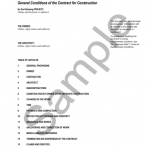
Agreements such as A101® – Agreement Between Owner and Contractor and A201® – General Conditions of the Contract for Construction work together to define the owner-contractor relationship and the conditions that govern the project.
A201 establishes processes for project administration, change orders, construction change directives, claims, scheduling responsibilities, and payment.
Instead of creating a new process every time conditions change, the contract provides a defined path and consistent framework everyone can follow.
They Standardize Payment Applications
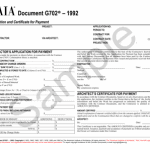
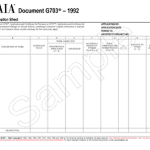
Payment applications such as G702® and G703® provide a standardized process for documenting payments, helping owners, architects, and contractors work from the same information throughout construction.
They Create Consistency Across Jobs
Most contractors manage multiple projects at once, each with their own owner, subs, and schedule.
Using coordinated agreements creates consistency from job to job. A401™ – Agreement Between Contractor and Subcontractor also flows obligations from the prime contract down to every sub, reducing conflicts between contract documents.
They Are Known in the Industry
When contract requirements are unclear, the effects appear quickly through delayed approvals, disputed scope, payment delays, and avoidable claims. Consistent, court-tested terms help close those gaps before construction begins.
Contractors who use AIA Contract Documents keep projects moving with contract language their project teams already understand.
Why Do Owners and Developers Use AIA Contract Documents?
For owners and developers, the contract is one of the first tools for protecting the financial investment of the project.
They Establish Risk Allocation
Owner agreements establish how risk is allocated, how responsibilities are assigned, and how important project decisions are documented throughout design and construction.
Fragmented or heavily customized contracts can create inconsistencies between the owner, architect, contractor, surety, lender, and insurer.
They Cover All Project Delivery Methods
Whatever the delivery method, there’s a coordinated set of AIA agreements built for it, including traditional design-bid-build, design-build, progressive design-build, and construction manager as advisor or constructor.
That coverage means owners can start every project, simple or complex, from the same trusted standard.
They Provide a Coordinated Framework
AIA Contract Documents provide owners with a coordinated framework that supports many of the decisions carrying the greatest financial impact, including:
- Selecting the appropriate project delivery method
- Establishing payment structures
- Managing project changes
- Defining administrative responsibilities
- Documenting performance and payment bonds
For example:
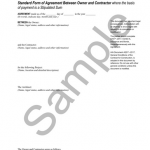
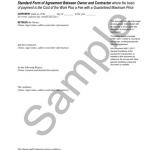
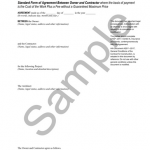
- A102™ supports cost-plus work with a Guaranteed Maximum Price (GMP).
- A103™ supports cost-plus work without a GMP.
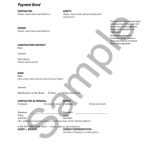
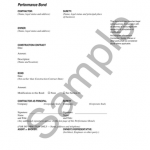
- A312™ provides coordinated performance and payment bond forms.
They Are Trusted in the Industry
On large projects, a single dispute can create costly delays, increased costs, and unnecessary litigation. Starting with agreements that have been refined through decades of industry use helps reduce that risk before construction begins.
Owners who use AIA Contract Documents protect their investments with a framework every project party can trust.
Build Smart With AIA Contract Documents
Whether you’re an architect, contractor, or owner, the goal is the same: establish clear expectations before work begins. The industry runs on AIA Contract Documents because they handle the hardest parts of a project, from risk to payment to change, in coordinated agreements developed specifically for construction.
That’s why experts in AEC trust ACD.
“Anyone can write a contract. Building one the AEC industry relies on carries a different kind of responsibility, one we’re proud to bear. AIA Contract Documents are written by the industry, for the industry, and updated as construction practices change. That’s not paperwork. That’s a foundation the whole industry trusts.”
Nick Macey, CEO, AIA Contract Documents
With an AIA Contract Documents subscription, your organization has access to all the agreements and forms you need, giving every new project a stronger contractual foundation.
Architects use AIA Contract Documents to define services, establish compensation, allocate responsibilities, and reduce professional risk through agreements developed specifically for design professionals.
Contractors rely on AIA Contract Documents to establish payment procedures, manage change orders, coordinate subcontract agreements, and create consistent project administration across multiple jobs.
Owners use AIA Contract Documents to allocate risk, document project responsibilities, establish payment structures, and provide coordinated agreements recognized throughout the construction industry.
AIA Contract Documents offers more than 300 coordinated agreements, contract forms, and administrative documents that support nearly every construction project delivery method and participant.