
Construction Allowances: What They Are and How AIA A201 Defines Them

Contractor and owner review construction allowance in the contract

Not every cost is known when a construction project goes out to bid. Finish selections may still be in progress, specifications may be incomplete, and material prices may change. A construction allowance gives owners and contractors a way to account for those unknowns without delaying the project or leaving costs out of the contract.

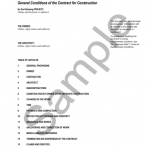
With a clear picture of what allowances cover and how adjustments get made, you can bid accurately and avoid surprises during construction. A201® – General Conditions of the Contract for Construction establishes the framework that governs allowances on most commercial projects. Knowing that framework before you sign is one of the more practical things you can do to protect your contract sum.

Quick Decision Guide: Is It an Allowance or a Contingency?

Construction allowances and contingencies both address cost uncertainty, but they solve different problems. Understanding the difference helps you price your work accurately and avoid contract disputes later.

If the Cost Is…

Use…

A known item with an unknown final price

Construction Allowance

An owner-selected finish or fixture

Construction Allowance

An unexpected condition that may or may not occur

Contingency

A reserve for unforeseen project costs

Contingency

What Is a Construction Allowance?

A construction allowance is a specific dollar amount included in the contract sum as a placeholder for items whose exact cost cannot be determined at bid time. The allowance holds a position in the contract until the item is selected and purchased, at which point the actual cost replaces it through the change order process.

Allowances are used when the owner has not made final selections for certain finishes or materials, when specifications are incomplete at the time of bidding, or when material prices are subject to significant variation. Common examples include flooring, light fixtures, plumbing fixtures, and appliances.

Because the contractor already knows how the item will be installed, labor, overhead, and installation costs are included in the contract sum. The allowance covers only the cost of the material or equipment itself.

How AIA A201 Defines Construction Allowances

Under A201, construction allowances follow these general rules:

  • All allowances listed in the contract documents must be included in the contract sum.
  • The owner directs which items and vendors fill the allowance, though the contractor can object to a vendor for reasonable cause.
  • Allowances cover the cost of materials and equipment delivered to the site, including taxes, minus any trade discounts.
  • The contractor’s costs for unloading, handling, labor, installation, overhead, and profit are included in the contract sum, not in the allowance amount itself.
  • If actual costs come in higher or lower than the allowance, the contract sum is adjusted by change order to reflect the difference.
  • The owner is responsible for selecting allowance items on time.

Together, these provisions give both parties a clear framework: the contractor prices the work they control, and the allowance holds the place for what the owner still needs to decide.

Allowances vs. Contingencies: What’s the Difference?

Allowances and contingencies both represent cost uncertainty on a project, but they work differently and serve different purposes. Confusing the two can lead to inaccurate bids, unexpected change orders, and payment disputes.

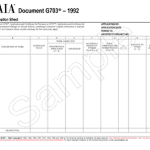
An allowance is for a specific, known item whose final cost is not yet determined. The item will be purchased; only the price is unknown at bid time. Allowances appear as named line items in the contract documents and on the schedule of values, typically tracked using G703® – Continuation Sheet. When the owner selects the item and the actual cost is known, the allowance is closed out through a change order.

A contingency is a reserve for unexpected costs that may or may not occur. It’s not assigned to a specific scope item in advance. How contingencies are managed depends on the contract type and the terms the parties negotiate.

Allowance adjustments follow a defined process under A201, so both parties know what to expect when actual costs come in. The way contingency draws work depends entirely on what the parties negotiated, and that language varies from contract to contract.

Pro Tip Before you sign, confirm that every allowance is clearly identified in the contract documents. A few minutes of review now can help prevent payment disputes once construction kicks off.

How Construction Allowance Adjustments Work

Once the owner selects the allowance item and the actual cost is known, a change order adjusts the contract sum to reflect the difference.

Here’s a simple example. A project has a $10,000 flooring allowance in the contract sum. The contractor’s overhead, labor, and installation costs for flooring are already in the contract sum. The material cost is the only allowance. When the owner selects the flooring, the actual material cost is determined:

  • If the flooring costs $12,000, the contract sum increases by $2,000 through a change order.
  • If the flooring costs $8,500, the contract sum decreases by $1,500 through a change order.

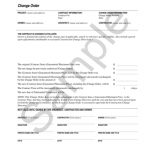
G701™ – Change Order documents this by formally adjusting the contract sum and contract time. The change order must reflect the difference between actual material costs and the allowance amount. It should also account for any changes in the contractor’s handling, labor, or installation costs.

Allowance adjustments are one of the most common triggers for change orders on a project.
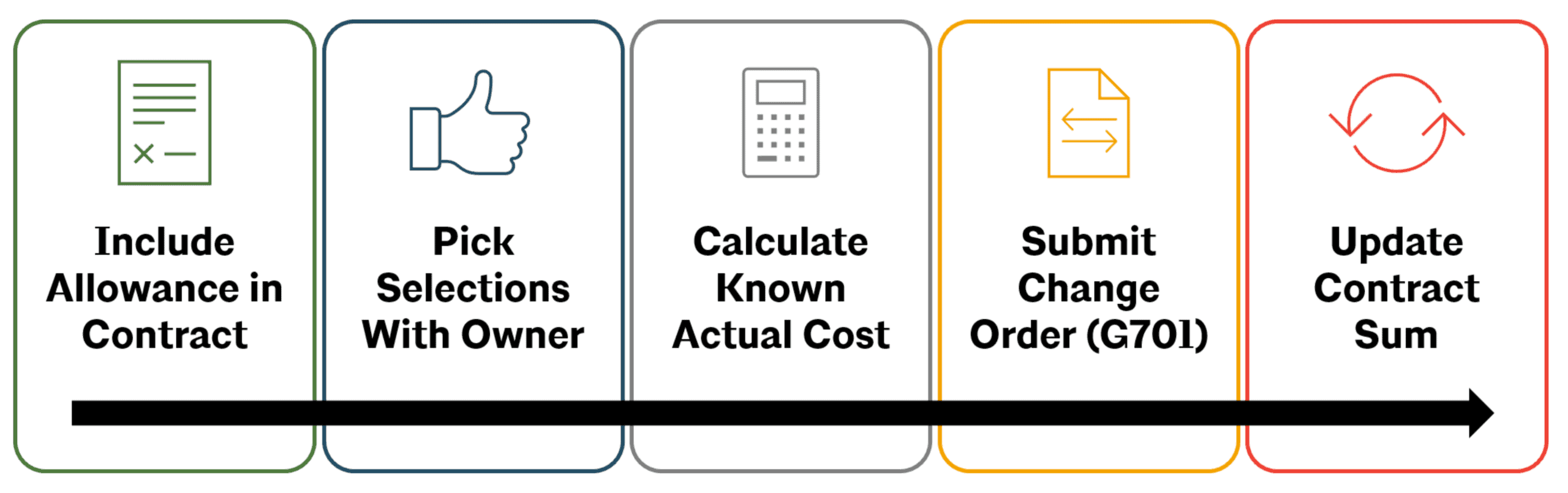
How a Construction Allowance Becomes a Change OrderHow a construction allowance becomes a change order

Pro Tip When documenting an allowance adjustment, account for more than the material cost. Include any changes to handling, labor, installation, or other contract costs so the change order reflects the full impact on the project.

Start Your Next Project With the Right Contracts in Place

Construction allowances are just one part of a coordinated contract system. A201 establishes the rules for allowances, while documents like G701 and G703 help you document changes and manage payments throughout the project.

With an unlimited subscription, you get access to the full AIA document library, including 300+ other standards-backed agreements and forms that help reduce risk and keep projects moving from bid to closeout.

Frequently Asked Questions

What is a construction allowance?

A construction allowance is a placeholder amount in the contract sum for materials or equipment whose exact cost isn’t known when the contract is signed. Once the actual cost is known, the contract sum is adjusted through a change order.

What's the difference between an allowance and a contingency?

An allowance covers a known item with an unknown final price. A contingency is a reserve for unexpected costs that may or may not occur during construction.

Do construction allowances include labor?

Typically, no. Under A201, the allowance generally covers the cost of materials or equipment, while labor, installation, overhead, and profit are included elsewhere in the contract sum.

How are allowance adjustments made?

Once the owner selects the item and the actual cost is known, the contract sum is adjusted through a change order to reflect the difference between the allowance and the actual cost.

Who selects allowance items?

Under A201, the owner generally selects the items and vendors, although the contractor may object to a vendor for reasonable cause.

Disclaimer: The information contained in this article is for general informational purposes only, and the views contained herein are the author’s own. It is not legal advice or legal opinion; it does not create any attorney-client relationship; and it may not be used to indicate any intent or to inform any interpretation of ACD’s documents or services, which the AIA Documents Committee separately creates. If you need advice, seek the help of an attorney or other qualified professional who can help you make decisions based on the specifics of your situation.