
Who Signs a Construction Change Directive?
Initially, only the owner and architect sign a construction change directive.
The contractor’s agreement is not required for the directive to take effect. However, the contractor may sign the document if they agree with the proposed cost and time adjustment.
Once all parties reach agreement, they typically execute a change order to formally incorporate those adjustments into the contract.
Until then, the contractor may continue documenting the directed work and include eligible costs in applications for payment while the final cost gets worked out.
What Is a Change Order?
A change order is a written modification to the contract, signed by the owner, architect, and contractor, that adjusts the contract sum, the contract time, or both. Unlike a construction change directive, a change order requires agreement from all parties before it takes effect.
G701 is the form used to document these agreed-upon changes.
Because everyone has agreed to the revised scope, cost, and schedule, change orders generally carry less dispute risk than construction change directives. They create a clear, signed record of the modification before additional work begins.
Types of Change Orders
Not every change order increases the project cost. Depending on the circumstances, a change order may increase, decrease, or simply clarify the work.
Additive Change Order
An additive change order increases the contract sum because additional work or expanded project scope has been approved.
Deductive Change Order
A deductive change order reduces the contract sum when work is removed from the original scope or when value engineering results in lower project costs.
Zero-Cost Change Order
A zero-cost change order modifies the scope, schedule, or project responsibilities without changing the contract sum.
Understanding these different types of change orders helps ensure the contract accurately reflects how the project evolves over time.
What Triggers a Change Order Request
A change order usually begins with another project document or communication rather than the change order itself.
Common triggers include:
- An owner-requested design revision
- An architect’s supplemental instruction (ASI)
- A proposal request (PR)
- A request for information (RFI)
- Unforeseen site conditions
- Regulatory or code changes
For example, an owner might request a design change. The architect issues a proposal request describing the revised scope, and the contractor evaluates the impact on cost and schedule. If everyone agrees with the proposed adjustment, the parties execute a change order, and the adjustment becomes part of the contract record.
This structured process creates a clear project record and helps ensure changes are documented before they become disputes.
Change Order vs. Construction Change Directive: Key Differences
Both documents modify the work, but they are used at different points in the decision-making process. The core distinction comes down to agreement.
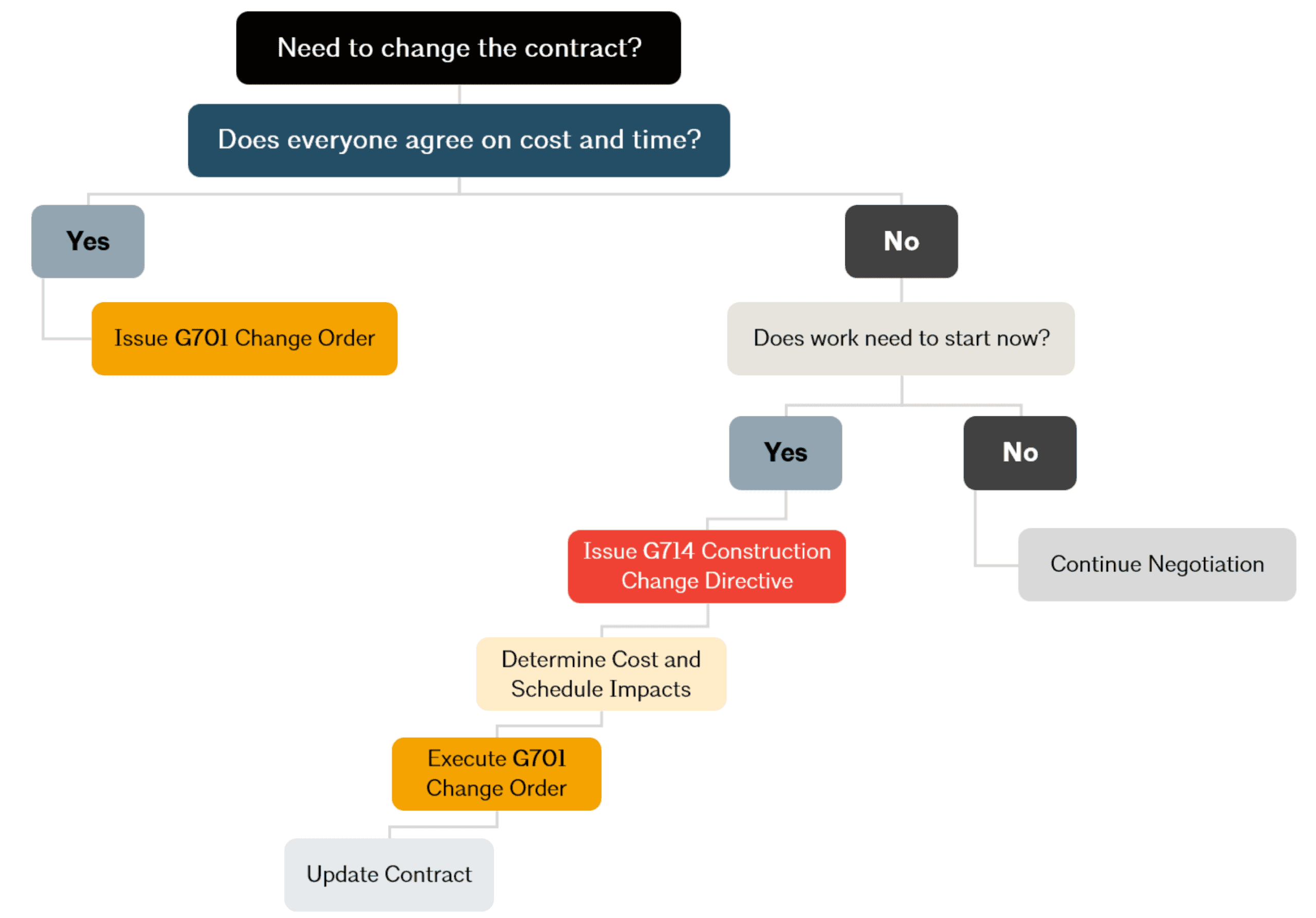
A change order documents a change that all parties have agreed to, including its impact on the contract sum and contract time. A construction change directive allows the owner to direct change work before those details have been finalized.
Understanding this distinction helps project teams choose the right document and maintain a complete contract record.
How the Change Order Process Works
Most construction change orders follow these five steps.
- Identify the Need for a Change: A change may result from an owner request, design clarification, differing site condition, regulatory requirement, or another project issue.
- Document the Proposed Change: The project team issues a proposal request, request for information (RFI), architect’s supplemental instruction (ASI), or another project communication describing the proposed work.
- Evaluate Cost and Schedule Impacts: The contractor reviews the requested change and prepares pricing, schedule adjustments, and any supporting documentation.
- Review and Approve: The architect reviews the proposal against the contract documents and recommends whether the owner should approve the change.
- Execute Change Order: Once the owner, architect, and contractor agree on the adjustment, they execute the change order, formally modifying the contract.
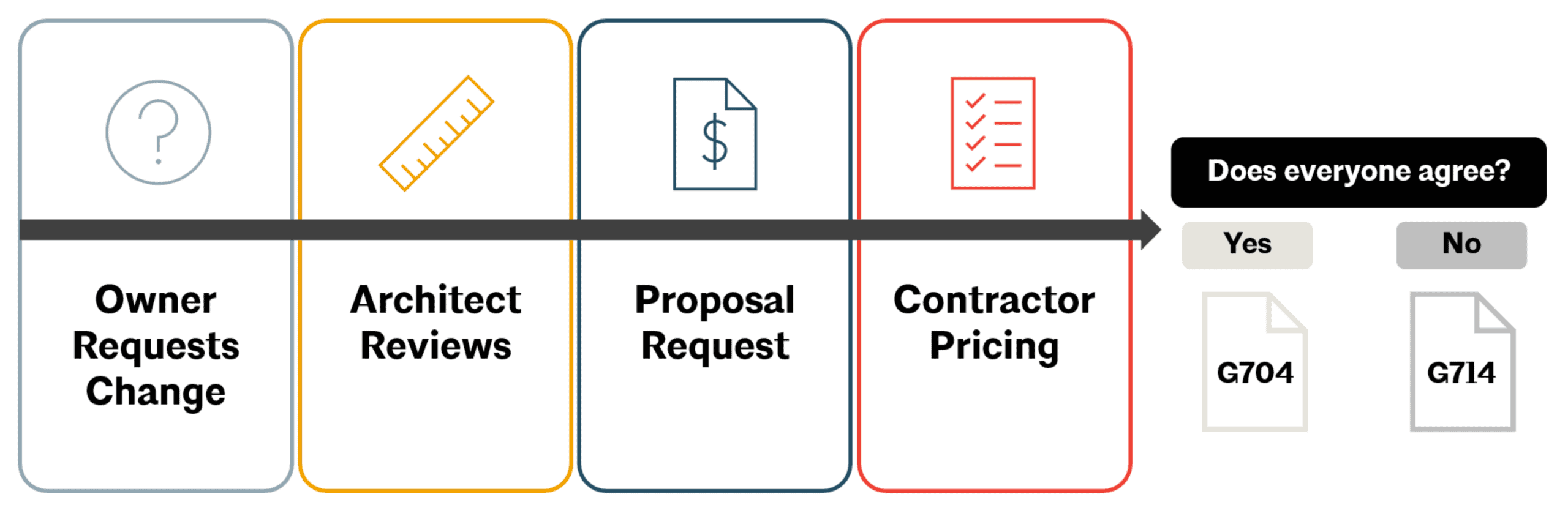
Following the same documented process for every project change creates a consistent project record and minimizes confusion later.
The Architect’s Role in the Change Management Process
The architect plays a central role in evaluating proposed changes before they become part of the contract.
For architects, maintaining complete documentation throughout the process also helps preserve a clear project record if questions arise later.
Rather than simply forwarding contractor pricing, the architect typically reviews the proposed work and evaluates whether the requested adjustment is appropriate before preparing the change order for the owner’s signature. Well-documented proposals make this review more efficient and help avoid unnecessary back-and-forth between the project team.
Avoiding Informal Changes
Discussions about changes to the contractor’s scope of work sometimes happen informally, through verbal instructions, emails, or field conversations, rather than through a change order or construction change directive. This pattern is sometimes referred to as a constructive change. Without proper documentation, disagreements can arise over whether the work was authorized, how much it should cost, or whether additional contract time is justified.
Informal direction often shows up as:
- Verbal instructions given during jobsite meetings
- Informal owner requests that expand the project scope
- Design clarifications that require additional work
- Repeated changes to work sequencing that reduce productivity
- Inspection requirements that exceed the original contract
- Delayed decisions that force contractors to perform work differently than originally planned
Although these situations may seem routine, they can significantly affect project cost and schedule if they are not documented properly.