
Substantial completion and final completion mark two different handoffs in a construction project. Confusing them can delay occupancy, blur responsibility for the work, misalign warranty dates, and create disputes over retainage or final payment. The distinction matters because each milestone answers a different operational question:
- Can the owner use the work for its intended purpose?
- Has the contractor completed all remaining contract requirements?
Teams that understand substantial completion vs. final completion can assign responsibilities clearly and keep closeout moving with proper documentation. The signed contract documents govern the outcome of every project, but a disciplined process helps owners, contractors, architects, and construction managers identify what must happen at each stage.
Quick Decision Guide: Which Milestone Are You Managing?
If the project is in this condition | Focus on this milestone |
The owner can occupy or use the work, but minor corrective work remains. | Substantial completion |
A defined portion of the project is ready for its intended use before the rest. | Substantial completion for that designated portion, if the contract permits it |
Warranties, maintenance, security, utilities, or insurance responsibilities may be shifting. | Document substantial completion and the exact transfer terms |
Punch list work is complete and required closeout records have been submitted. | Final completion |
The contractor is assembling the final application for payment and required affidavits, lien documents, or surety consent. | Final completion and final payment requirements |
Substantial Completion vs. Final Completion at a Glance
What is Substantial Completion in Construction?
Substantial completion is generally reached when the work, or a designated portion of it, is sufficiently complete under the contract documents for the owner to occupy or use it for its intended purpose. Limited corrective or incomplete work may remain, and that work should be identified, quantified in terms of estimated cost, and assigned a completion period.
What is Final Completion in Construction?
Final completion comes later. It generally means the contractor has completed the remaining contract work, resolved punch list items, delivered required closeout documents, and satisfied the conditions tied to final payment. The contract, specifications, and applicable law determine the precise requirements.
The practical difference is simple: substantial completion supports use of the work while defined obligations remain; final completion closes those remaining obligations and supports the final financial and administrative steps. Neither date should be treated as an informal label. Each one should be supported by the records required under the contract.
What Is Substantial Completion in Construction?
Under the familiar AIA Contract Documents (ACD) framework, substantial completion centers on intended use. The work does not need to be perfect or entirely free of minor omissions.
It must, however, be sufficiently complete for the owner to occupy or use it as intended. A lobby with a paint touch-up may qualify, but a building without a functioning life-safety system generally would not.
The actual decision depends on the contract documents, the project facts, and the professional judgment of the architect.
What Does Each Party Do for Substantial Completion?
The contractor typically prepares a list of incomplete or corrective items when they believe the work is substantially complete.
The architect inspects the work, supplements the list with anything missing, and determines whether the milestone has been reached under the contract.
The resulting punch list helps define what remains, but creating the list does not relieve the contractor of responsibility for other work that fails to meet the contract documents.
Owners sometimes ask the architect to create the list instead, but the contractor is on site every day and is best positioned to know what work remains.
Certificate of Substantial Completion vs. Certificate of Occupancy
A certificate of substantial completion is often confused with a certificate of occupancy.
Substantial completion is a contractual milestone in which the architect of record certifies that the project is sufficiently complete and can be used for its intended purpose.
A certificate of occupancy is a regulatory approval issued by the applicable building authority confirming that the building, or a designated portion of it, may legally be occupied.
Although the dates of substantial completion and the certificate of occupancy may be the same or occur close in time, they have very different legal definitions and involve different processes.
What Does the Certificate of Substantial Completion Document?
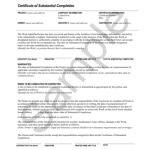
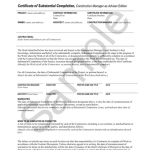
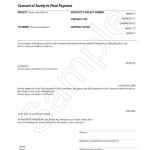
For projects using the AIA document family, G704™ – Certificate of Substantial Completion records the substantial completion date for the work or a designated portion.
It also provides a place to:
- Identify incomplete or corrective work
- Set the time allowed to finish it
- Allocate responsibilities between the owner and contractor, which may include:
- Maintenance
- Heat
- Utilities
- Damage to the work
- Security
- Insurance
The certificate should clearly describe what work is covered. That description is especially important when the owner accepts a floor, wing, phase, or other designated portion before the entire project is ready. Vague boundaries can create uncertainty about access, protection, utilities, warranties, and responsibility for damage.
What Can Change at Substantial Completion?
- Use or occupancy: The owner may begin using the work for its intended purpose, subject to permits, approvals, certificates of occupancy (if required), and contract requirements.
- Responsibility for the site: Maintenance, security, utilities, insurance, and protection responsibilities may transfer as stated in the certificate and contract.
- Warranty timing: Warranties may begin on the substantial completion date unless the contract or certificate establishes a different date.
- Punch list performance: The contractor must finish incomplete work and correct nonconforming work within the required time.
- Payment and retainage: Substantial completion may affect retainage or progress payment rights, but the contract and applicable law control the amount and timing.
What Is Final Completion in Construction?
Final completion is the point at which the contractor has finished the work required by the contract, including the corrective and incomplete items identified at substantial completion.
It’s broader than closing a punch list. The contractor may also need to submit record drawings, operations and maintenance information, warranties, training records, affidavits, lien documentation, surety consent, and other deliverables required by the agreement and specifications.
What Does Each Party Do for Final Completion?
The project team typically verifies completion through a final inspection and a review of outstanding administrative requirements.
The contractor then submits its final application for payment with the supporting documents required by the contract.
The architect’s role in evaluating the work and certifying payment depends on the governing agreement and general conditions.
Certificate of Final Completion
AIA Contract Documents does not publish a universal Certificate of Final Completion or general project closeout form. Teams should follow the procedures for final completion and payment in their signed documents. Do not assume that one standard certificate closes every project.
What Final Completion Can Trigger
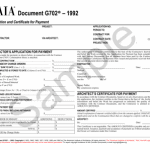
- Final payment review: The contractor may submit the final application for payment after satisfying the contract’s completion and documentation requirements.
- Release of remaining retainage: Withheld retainage may become eligible for release, subject to the contract, required documentation, unresolved claims, and applicable law.
- Closeout of open items: Punch list work, change documentation, training, manuals, warranties, and required record information should be complete and accepted as required.
- Transition to ongoing operations: The project team moves from active construction administration to facility operations, warranty tracking, and record retention.
Key Differences Between Substantial Completion and Final Completion
There are several key differences between substantial completion and final completion.
Substantial Completion | Final Completion | |
Project Use | Asks whether the owner can use the work for its intended purpose | Asks whether all contract work and required closeout obligations are finished |
Remaining Work | A defined punch list can remain at substantial completion | Contractor should have completed those items and corrected known nonconforming work |
Documentation | Identifies the date, covered work, remaining items, and responsibility transfers | Depends on the broader closeout package required by the contract |
Responsibility | Operational responsibilities may shift | Confirms contractor has discharged the remaining completion obligations, subject to surviving warranty and correction duties |
Warranty Dates | Many warranties may begin, unless the contract states otherwise | Does not automatically restart those periods |
Payment | May support a reduction in retainage or a progress payment | Generally, supports the final application for payment after all stated conditions are met |
Timing | Earlier construction milestone | Follows the team resolving remaining physical, administrative, and financial items |
7 Steps To Move From Substantial Completion to Final Completion
1. Read the Contract Before the Milestone
Review the agreement, general conditions, supplementary conditions, specifications, and schedule requirements before requesting an inspection. Build one checklist from the actual contract language. Include prerequisites for occupancy, substantial completion, final inspection, final payment, and release of retainage.
2. Define the Scope of the Handoff
State whether the certificate covers the entire project or only a designated portion. Record access limitations and responsibility for occupied areas, remaining work zones, utilities, security, maintenance, and protection. Coordinate partial occupancy with the contract and authorities having jurisdiction.
3. Build a Controlled Punch List
Use one controlled list with an item number, location, responsible party, due date, status, and verification field. Separate incomplete work from corrective work when that distinction helps the team prioritize. Close an item only after the required party verifies it.
4. Record Every Responsibility and Date
Do not let operational handoffs happen only through email or field conversation. Record the substantial completion date, warranty commencement dates, utility and security responsibilities, insurance obligations, owner training, keys and access credentials, and the deadline for remaining work.
5. Audit Closeout Deliverables Early
Track closeout records before the final weeks of construction. Review operations and maintenance information, record drawings, testing and commissioning reports, permits, warranties, training, spare parts, certificates, and financial documents while the people who created them are still engaged. For a broader workflow, use these construction contract closeout best practices.
6. Reconcile Payment Requirements
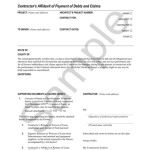
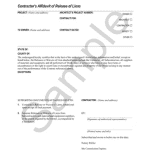
Confirm the contract balance, approved changes, retainage, prior payments, claims, and the documents required for final payment. Depending on the contract, those materials may include affidavits addressing debts and claims, lien releases or waivers, and consent of surety. Because lien and retainage rules vary, obtain project-specific legal guidance when needed.
7. Document Final Verification
Complete the final inspection, verify punch list closure, resolve remaining administrative items, and preserve the record supporting final payment. Record the actual final completion date in the project file even when the contract does not call for a separate final completion certificate.
What Delays Final Completion?
Here are some common mistakes that may delay final completion:
- Requesting substantial completion before life-safety, commissioning, or intended-use requirements are ready for evaluation.
- Using a vague punch list without owners, due dates, locations, or verification status.
- Failing to document which portion of the work is covered by a certificate.
- Assuming every warranty starts at final completion instead of checking the contract and certificate.
- Treating substantial completion as automatic entitlement to all retainage.
- Waiting until the end to collect manuals, record information, training records, affidavits, lien documents, or surety consent.
- Relying on an assumed Certificate of Final Completion instead of following the signed contract’s final-payment procedure.
Make Each Milestone Easier To Manage
Substantial completion vs. final completion is more than a terminology question. The two milestones organize occupancy, responsibility, correction work, warranties, payment, and closeout. Teams protect the schedule and reduce ambiguity when they define the milestone, use the correct document, and keep one reliable record of every remaining obligation.
Create, edit, and finalize the AIA Contract Documents your team needs from substantial completion through final payment. Explore how our platform supports consistent project administration and closeout.
Frequently Asked Questions
It generally means the work, or a designated portion, is sufficiently complete under the contract documents for the owner to occupy or use it for its intended purpose. Minor incomplete or corrective work may remain.
On projects using the familiar AIA framework, the contractor requests the inspection and submits a list of remaining items. The architect inspects the work and determines whether substantial completion has been reached under the contract.
Yes, if the contract and project circumstances support substantial completion of a designated portion. The certificate should identify the covered area and allocate responsibilities clearly.
Many warranties may begin on the substantial completion date unless the contract or certificate specifies a different commencement date. Review the appropriate contract documents for each warranty.
Not usually. Substantial completion may affect progress payment or retainage, but final payment generally follows final completion and submission of all documents required by the contract.
The contractor must complete identified incomplete work, correct nonconforming work, and satisfy outstanding closeout requirements. The signed contract and certificate establish the applicable duties and deadlines.