
A written approval requirement does not operate independently from what happens at the jobsite. If your actions imply that a change order has been approved, written requirements won’t necessarily protect you.
In Waterworks Operating Co., LLC v. 514 W. 24th Owner LLC, a New York appellate court held that an owner impliedly ratified change orders by accepting materials delivered under them without objection. The decision also shows why suppliers must support each claimed delivery with evidence presented at the proper stage of a dispute.
Acceptance Implied Change Order Ratification
Waterworks supplied bathroom fixtures and cabinet materials for the redevelopment of a building in Chelsea. Purchase orders and change orders brought the full contract price to $2,577,166.99. The owner paid $1,608,827.37 for delivered and accepted goods, and Waterworks had to file a $968,339.62 mechanics lien for the remaining balance.
The owner argued that its original construction manager lacked authority to approve $390,605.51 in change orders. Their construction management agreement required the owner’s prior written approval.
The court rejected that defense. The owner and construction manager accepted the materials delivered under the disputed change orders without objection. According to the court, that conduct constituted implied ratification of the agreements.
Liability Survived, but Some Damages Did Not
Not all of Waterworks’ damages survived. Waterworks submitted invoices establishing delivery of $2,340,098 in materials, in total. However, it was not able to establish delivery of the remaining $237,069 in materials. Because Waterworks did not have delivery documentation for those materials, it relied on an affidavit from its accounts-receivable manager. The court found the documentation insufficient to determine whether the materials had actually been delivered to the project site.
Even though the court determined that written requirements for change order approvals could be overcome by the conduct of the parties, there still needed to be written documentation supporting the materials delivery.
Key Takeaway: Align Approval Language With Site Controls
What happens on site should align with what’s in the contract. Owners should pair written approval requirements with an authority matrix, receiving procedures, and a prompt escalation process for unauthorized work or deliveries. A provision that explicitly disallows implied approval based on the parties’ conduct might also help clarify the parties’ intent, but teams shouldn’t rely on contract language alone when actual field practices contradict it.
The project team should identify:
- Who can approve a change
- Who can accept materials and what documentation they need
- Who must issue a written rejection or reservation
- How quickly that response must be issued
- How disputed materials should be stored or handled
The contract administration plan should also distinguish the architect’s or construction manager’s authority to recommend, document, direct, or approve a change.
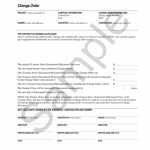
For agreed-upon changes, G701™ – Change Order provides a standard way to document changes to the work, contract sum, and contract time. Consistently using standardized forms helps the owner, contractor, and architect create a written record of their agreement before changed materials are ordered, delivered, or installed.
Suppliers and subcontractors should preserve item-level proof, including the:
- Purchase order or change order
- Delivery ticket
- Date
- Location
- Quantity
- Recipient
- Invoice
- Signatures, acceptance, or objections
That record connects authorization, performance, and damages before a dispute begins.
Project teams should apply their change procedures consistently and seek project-specific legal review when authority or ratification is disputed.
Strengthen Your Change Order Process
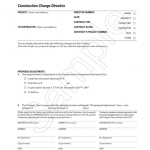
A clear change order process helps project teams define project changes, document cost and schedule adjustments, assign approval authority, and select the appropriate change instrument before work proceeds. Learn when to use a change order, a construction change directive, or an architect’s supplemental instruction, and what to verify before signing.