
How To Set Your Start Date: Notice to Proceed in Construction
A notice to proceed is one of the most consequential documents on a construction project. It tells the contractor when the clock starts. Every milestone in the schedule, including substantial completion, is then measured from that date.
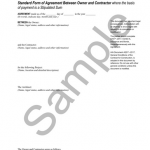
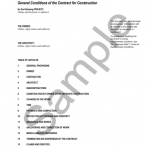
This article explains how A101® – Agreement Between Owner and Contractor and A201® – General Conditions of the Contract for Construction establish the commencement of work date, and why getting that date right matters for schedule management, risk allocation, and project execution.
What Is a Notice to Proceed in Construction?
A notice to proceed (NTP) is a formal written document from the owner authorizing the contractor to begin work. In most cases, it establishes the official project start date and triggers the start of the Contract Time clock.
An NTP also signals the contractor to mobilize crews, order materials, coordinate subcontractors, and begin scheduled work activities. Under A101, the parties can designate the notice to proceed as the commencement date.
Not every project uses a formal NTP. Whether one is required, and what it must contain, depends on the contract terms.
What a Notice to Proceed Typically Includes
To reduce confusion and avoid disputes, an NTP should clearly identify:
- The official commencement date
- The project name and contract reference
- Authorization to begin work
- Any conditions precedent to mobilization
- The anticipated substantial completion date
A clear NTP helps align the owner, contractor, and project team before work begins.
What AIA A101 and A201 Say About Commencement
Article 8 of A201 outlines the general conditions governing project scheduling and Contract Time.
Definition of Contract Time in Construction
Section 8.1.1 defines “Contract Time” as the period allocated for the substantial completion of work, including authorized adjustments. Section 8.2.1 states that the contractor acknowledges the Contract Time is a reasonable duration for completing the work.
How A101 Defines the Commencement Date
The specifics of Contract Time are established in Article 3 of A101. Section 3.1 allows the parties to choose the commencement date using one of three options:
- The date of the Agreement
- The date set in a notice to proceed issued by the owner
- Another specified date or method for determining the commencement date
Section 3.2 further states that the “Contract Time shall be measured from the date of commencement of the Work.”
Why the Start Date Matters
The commencement date does more than mark day one. It establishes the baseline for measuring Contract Time and determines when substantial completion is due. If the start date is unclear or disputed, every downstream milestone becomes harder to enforce.
A201 governs how the project operates after work begins, including:
- Change management
- Payment certification
- Delay analysis
- Claims administration
- Dispute resolution
The start date established in A101 forms the foundation for all of those processes.
Key Considerations When Setting the Commencement Date
Choosing the right commencement date helps contractors and owners manage schedules proactively and reduce the risk of delays or disputes.
Option 1: Use the Date of the Agreement
Selecting the Agreement date as the commencement date can accelerate project startup and simplify schedule tracking.
Benefits
- Faster mobilization. The contractor can begin project activities immediately without waiting for a separate notice to proceed.
- Administrative clarity. Using the Agreement date creates a straightforward, easily identifiable start point.
Risks
- Execution delays. If approvals, financing, or signatures are delayed, the actual start of the work may lag behind the contractual start date.
- Limited preparation time. Contractors may not have adequate time for staff mobilization, procurement, or resource allocation before Contract Time begins running smoothly.
Option 2: Use a Notice to Proceed
Using an NTP as the commencement date offers a more controlled and operationally aligned project launch.
Benefits
- Clear authorization. The owner can issue the NTP once financing, permits, insurance, or other prerequisites are complete.
- Better readiness coordination. Contractors gain more certainty around mobilization timing and resource planning.
Risks
- Potential schedule uncertainty. Delays tied to external factors, such as regulatory approvals, permits, or financing, can postpone issuance of the NTP and impact the overall project timeline.
To reduce risk, parties should consider:
- Establishing a deadline for issuing the NTP.
- Defining consequences for delayed issuance.
- Addressing potential adjustments to the Contract Time or Contract Sum if delays occur.
Option 3: Use a Custom Commencement Date
Some projects require a more tailored approach. A101 allows parties to define a specific date or another method for determining commencement.
Benefits
- Greater flexibility. The parties can align the start date with site availability, phased turnover, financing milestones, or procurement schedules.
- Project-specific coordination. Custom commencement provisions can better reflect complex project conditions.
Risks
- Dispute concerns. Vague or poorly drafted language can create disputes over when Contract Time begins.
If the parties choose a custom commencement date, they should clearly document:
- The trigger event
- The process for determining the date
- Any required notices or approvals
Best Practices for Managing Contract Time
Strong schedule management starts with alignment before the Agreement is executed.
To reduce confusion and avoid disputes:
- Confirm the commencement date before signing.
- Coordinate owner and contractor expectations early.
- Align procurement, permitting, and mobilization schedules.
- Document any conditions tied to project start.
- Address unrealistic Contract Time assumptions before execution.
If any party believes the proposed schedule is unreasonable, negotiate revisions before the Agreement is signed, not after the work begins.
A clearly defined commencement date improves accountability, strengthens project administration, and reduces the risk of costly delays.
Keep Your Project Timeline Aligned From Day One
The commencement date is one of the most important scheduling decisions in a construction contract. Whether the parties choose the Agreement date, a notice to proceed, or another specified date, the goal is the same: establish a clear and enforceable starting point for Contract Time.
When owners and contractors align on the commencement date early, it creates a stronger foundation for project execution, milestone tracking, and substantial completion.
AIA Contract Documents helps teams efficiently create, share, and manage the industry’s leading construction documents. An unlimited subscription provides access to the full library of AIA Contract Documents, including A101 and A201, so your team can manage project schedules with confidence.