
Preliminary notices go by many names. Some people call them pre-lien notices or lien notices. Many states use their own terms, such as Notice of Furnishing or Notice to Owner.
Whatever you call them, these notices are useful communication tools that are often misunderstood. Used properly, a preliminary notice supports open communication up and down the construction payment chain, and that communication can stop small issues from turning into major payment disputes. In some cases, a preliminary notice may even help prevent a mechanics lien claim.
Here is what a preliminary notice does, who may need to send one, when it is due, and what to do when one lands on your desk.
What Is a Preliminary Notice?
A preliminary notice tells other parties on a project who is working on site. When a contractor sends a preliminary notice, they are letting the owner, general contractor, and sometimes the architect know they will be performing work on the project.
The notice also typically explains the type of work being done, when the contractor will begin, and who hired them. It may include the value of the work.
Most states require a preliminary notice to preserve lien rights. Requirements vary by state, but preliminary notices typically include:
- Owner name and contact information
- General contractor name and contact information
- Sender name and contact information
- Project location
- Description of work being performed
- Sender’s start date
- Value of sender’s work
Why Preliminary Notices Are Required
If a notice is only informational, it is fair to ask why states require one.
Preliminary notices exist to increase project transparency and balance risk. They are tied to mechanics lien rights because the right to lien project property is significant and creates risk for the owner and general contractor. A lien can disrupt everyone working on the job, even those who have nothing to do with the dispute.
As a result, many states require certain parties to send a preliminary notice near the beginning of the project to preserve their ability to file a lien. That way, the owner, architect, and general contractor understand who is doing work on the project and who may have mechanics lien rights if they are not paid.
Who Sends a Preliminary Notice, and Who Receives It?
Whether you need to send a notice depends on the type of work you are doing and the law in the state where the project is located.
Architects, general contractors, and developers often do not need to send these notices. Those parties sit close enough to project ownership that there may be little benefit in requiring notice from them. They are more likely to receive one.
For trades, material suppliers, and equipment rental companies, preliminary notices are commonly required to preserve lien rights. Lien rights are one of the most powerful tools contractors, subcontractors, and suppliers have to address slow or late payment. Even if you never want to file a lien, preserving the right to file one can be valuable to show you understand your rights and are willing to use them.
If You Are… | What To Expect |
A subcontractor or specialty trade | Notice is commonly required to preserve lien rights. Confirm your state rules and deadline before work starts. |
A material supplier or equipment rental company | Notice is commonly required, and it is often the only way the owner learns you are on the job. |
A general contractor | You may not need to send notice. Expect to receive notices and track them through closeout. |
An owner or developer | You generally do not send notice. Expect to receive notices and use them to build your waiver collection list. |
An architect | You usually do not send notice, though you may receive them for information. |
Recipients depend on state law, and your project’s location dictates which rules apply. Notice typically goes to the property owner, the general contractor, and the party who hired you. In some cases, a construction lender or other project participants must also receive notice.
Should You Send a Notice Even When It Is Not Required?
Often, yes. A preliminary notice creates a line of communication and announces that you are on the job. If you get into a dispute with your hiring contractor later, the general contractor and owner will already know who you are, what work you are doing, and that you understand your construction lien rights.
Since nobody wants a disagreement to become a lien claim, a notice can encourage everyone to work together.
When Is a Preliminary Notice Due?
Timing depends on the state. Notice is typically required shortly after your work begins, and deadlines are usually measured from when labor or materials are first furnished, often ranging from 20 to 45 days.
Whatever the deadline, it’s important to follow it. Sending a notice late can affect your lien rights. Depending on state law, a missed preliminary notice can limit or eliminate your ability to file a mechanics lien, even on a debt nobody disputes.
Preliminary notices also do not necessarily follow contractual notice rules, such as those in Sections 1.6 and 15.1.3 of A201® – General Conditions of the Contract for Construction. Instead, state rules control , and Section 15.2.8 specifically permits them. So while AIA contracts do include notice provisions, those provisions generally do not apply to statutory notices.
How To Send a Preliminary Notice
Once you know a notice is required, sending it can become a short, repeatable process.
Many people mistakenly believe preliminary notices must always be filed. Some states do require filing, but most simply require that the notice is sent by registered or certified mail. Failing to follow your state’s notice requirements can affect your legal rights, so it’s critical that you understand them.
Here are the steps to send a preliminary notice:
- Confirm whether your state requires a notice and identify the deadline.
- Gather the project and party details, including the owner, general contractor, lender, and property description.
- Complete the correct notice for your role and state.
- Serve it by the required method and keep your proof of service.
- Calendar any follow-on deadlines for a notice of intent to lien or mechanics lien in case payment stalls.
Those steps may eventually end with a lien waiver and release once payment clears.
Preliminary Notice vs. Notice of Intent to Lien
These two documents are often confused, and the difference matters.
A preliminary notice goes out early, typically before there is a payment problem, to preserve rights when required. A notice of intent to lien generally goes out later, after payment has stalled, as a warning that a lien filing is coming. One is routine paperwork. The other signals a potential payment dispute.
| Preliminary Notice | Notice of Intent to Lien | |
| When you send it | Early, at or near the start of furnishing labor or materials | Later, before filing a lien |
| Why you send it | To preserve future lien or bond rights | To prompt payment before a lien is filed |
| How it reads | Informational and routine | A formal demand |
If you receive a preliminary notice, recordkeeping is usually all that is required. If you receive a notice of intent to lien, payment is already a concern, and the sender may be indicating that enforcing lien rights is the next step.
Preliminary Notice in California: The 20-Day Notice
California generates more preliminary notice questions than most other states, and part of the reason is what the notice is called there.
Most people know the California preliminary notice as the 20-day preliminary notice. The name comes from the general timing rule, which is measured from when you first furnish labor or materials rather than from the date of your contract. Subcontractors, suppliers, and equipment lessors are the parties most likely to serve one, while general contractors and design professionals have different obligations.
California also sets its own rules on who must be served and how. Confirm the current requirements for your role and project before you send, and expect state-specific waiver and release forms later in the project as well.
Notice to Owner in Florida
For general contractors and owners, receiving a preliminary notice should not be cause for alarm. Unfortunately, some states require intimidating language full of legal terms and detailed references to lien rights.
Florida is the clearest example. Under Fla. Stat. 713.06, a Notice to Owner must carry the following language at the top of the notice:
WARNING! FLORIDA’S CONSTRUCTION LIEN LAW ALLOWS SOME UNPAID CONTRACTORS, SUBCONTRACTORS, AND MATERIAL SUPPLIERS TO FILE LIENS AGAINST YOUR PROPERTY EVEN IF YOU HAVE MADE PAYMENT IN FULL.
UNDER FLORIDA LAW, YOUR FAILURE TO MAKE SURE THAT WE ARE PAID MAY RESULT IN A LIEN AGAINST YOUR PROPERTY AND YOUR PAYING TWICE.
Not very friendly, is it? The language may sound intimidating, but the notice itself is still part of the statutory payment process. It is there to support communication on the job, so small problems do not snowball later.Florida also has requirements for waiver and release forms, so the documents exchanged later in the project may differ from the generic versions.
What to Do When You Receive a Preliminary Notice
Receiving a notice puts you on the other side of the process, with a different set of tasks.
Does a Notice Mean a Lien Is Coming?
No. That is not what a preliminary notice means.
They are also usually sent early in the project, before payment issues arise. Preliminary notices are designed to reduce the number of liens filed by improving communication on the job.
A notice tells you who is on the project. That creates a roll call for making payments and collecting lien waivers. If someone in the payment chain is reluctant to send a waiver, or refuses outright, treat it as an early red flag worth investigating.
Three Steps To Take When You Receive a Preliminary Notice
First, resist the urge to assume something is wrong. That is especially true in states where the required notice language includes legal jargon.
Second, file the notice in your records. Preliminary notices can give you a checklist of who may need to send lien waivers with pay applications. Beyond that, there may be no immediate action required. Read the notice, understand who sent it and why, and determine what documentation you will need from the sender.
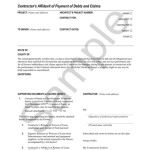
Third, when the project nears completion, revisit those notice files. Compare the list of parties who submitted notices against the list of parties who submitted lien waivers. Contractors already submit G706™ – Contractor’s Affidavit of Payment of Debts and Claims, as part of the closeout process to affirm that waivers are accounted for. A comprehensive list built from preliminary notices can help identify gaps.
If there are discrepancies, follow up and request the appropriate documentation. A quick conversation could confirm there are no hidden payment issues. If something is going on, it is better to know sooner so the project team has an opportunity to address the issue before it becomes a larger dispute.
On projects using A201, contractors may also be responsible for costs tied to lien claims. That means it’s important to have a preliminary notice and lien waiver plan to reduce risk.
Preliminary Notices Help Prevent Payment Surprises
Preliminary notices are not threats. They are project communication tools.
Used well, they help owners, architects, general contractors, subcontractors, and suppliers understand who is on the project, what work is being performed, and where payment risk may exist. That visibility helps teams protect lien rights, collect the right documentation, reduce payment disputes, and support a cleaner closeout.
Treat preliminary notices as part of your normal project documentation workflow. Send them on time when required. Keep them organized when received. Revisit them before final payment and closeout. A small amount of notice management early in the project can prevent much larger problems later.
Build Notice Management Into Your Payment Documentation
AIA Contract Documents helps project teams standardize payment documentation, lien waiver tracking, and closeout workflows. Explore the documents that keep payment records clear from project start through closeout.