
■ PRACTITIONER PERSPECTIVE
Throughout this article, Sandra Madison, CEO of Robert P. Madison International Architects shares insights from decades of experience using AIA Contract Documents (ACD).
Every architecture firm wants to spend more time designing projects and less time worrying about contracts. Whether you’re leading a two-person studio or a national practice, standardized agreements create consistency, reduce uncertainty, and help project teams focus on delivering successful projects instead of resolving contract questions.
That’s one reason so many firms continue relying on AIA Contract Documents. According to Sandra Madison, CEO of Robert P. Madison International Architects, standardized agreements provide more than legal protection. They create confidence.
Throughout her career, Sandra has relied on AIA Contract Documents because she knows they’re designed to protect the interests of the entire project team while providing a dependable foundation for project delivery.
Quick Takeaways
- Standardized contracts create consistency across projects
- B101™ remains a trusted foundation for owner-architect agreements.
- Coordinated contract families simplify project administration.
- Proven agreements help firms reduce legal uncertainty.
- Standardized documents benefit firms of every size.
Watch the Interview
Confidence Begins With a Trusted Foundation
Every project begins with an agreement. That agreement establishes responsibilities, allocates risk, and sets expectations before work begins.
Starting with a trusted, industry-standard contract gives architects greater confidence throughout the life of a project because the foundation has already been established. Sandra says that’s one of the biggest reasons her firm continues relying on AIA Contract Documents.
“I know that I’m covered. I know that not only is it safe for architects, but it also protects the owner and the contractor. It makes for a better project.”
Rather than wondering whether important issues have been addressed, project teams can focus on serving clients and delivering quality work.
Why B101 Continues to Be a Foundation
For many architecture firms, the owner-architect agreement establishes the framework for every project. Beginning with a balanced, well-understood agreement creates consistency for both internal teams and clients while reducing unnecessary negotiation over familiar contract provisions.
Sandra says B101 has remained her firm’s preferred owner-architect agreement because it provides a dependable starting point that can adapt to different project types without sacrificing consistency. Her firm also uses B143™ for design-build projects.
It’s More Than One Agreement
One of the greatest advantages of AIA Contract Documents isn’t a single agreement. It’s the coordinated family of agreements and forms designed to work together throughout the project lifecycle.
That includes:
- Owner-architect agreements
- Consultant agreements
- Bidding documents
- Change orders
- Payment applications
- Certificates of substantial completion
- Lien waivers and other project administration forms
Together, these documents create a consistent workflow from project kickoff through closeout.
Rather than managing disconnected forms developed by different organizations, architects can rely on documents intentionally designed to coordinate with one another. Sandra says that’s one of the biggest reasons her firm uses AIA contract documents whenever possible.
“We use everything that we can with AIA Contract Documents…because they’re very well coordinated.”
That consistency also extends beyond the architect’s office.
“Contractors also like them because they know they are proven, and they can trust the documents.”
Standardized Forms Simplify Construction Administration
Standardized forms don’t just improve consistency. They also make everyday project administration more efficient.
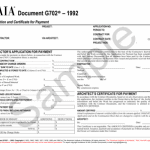
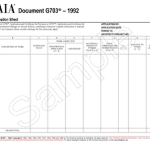
Sandra’s firm routinely uses G702® and G703® payment applications to certify contractor payment requests because they provide a familiar, repeatable process. Instead of starting from scratch each month, her team can quickly compare previous payment applications, verify work completed, and evaluate progress before approving payment.
The same coordinated approach applies to change orders, certificates of substantial completion, and lien waivers. Using familiar forms helps reduce confusion while creating a documented record throughout construction.
Helping Firms Focus on Clients
Contracts should support client relationships, not become distractions. When project teams begin with trusted agreements, conversations can focus on design, collaboration, and project success instead of rebuilding contract language or resolving uncertainty.
Sandra believes that confidence benefits everyone involved and becomes especially valuable for smaller firms.
“We’re a small firm and don’t have time to worry about what’s in our contracts.”
Many firms don’t have in-house attorneys or the resources to develop proprietary agreements. Instead, they need documents they can trust from the beginning.
“This is a wonderful set of documents. It’s already there. It’s been proven. It’s been vetted.”
Whether a firm has five employees or five hundred, standardized agreements provide a dependable foundation while still allowing project-specific modifications when needed.
“Whether you’re a small, medium, large [firm]… the documents are for all firm sizes.”
Proven on Real Projects
Sandra has relied on AIA contract documents across countless projects throughout her career, including the restoration of Cleveland’s historic Karamu House Theatre, the oldest Black theater in the United States.
Her firm has used AIA Contract Documents throughout multiple phases of the project, helping to establish consistency as work has progressed. Just as importantly, she says the client is comfortable using the documents as well.
“The client is now becoming very well versed in the AIA contracts. They trust the documents as well.”
For Sandra, that’s one of the strongest indicators that standardized agreements create value beyond the architect’s office.
Final Thoughts
Great projects are built on clarity, consistency, and trust. Standardized agreements don’t eliminate every project challenge, but they provide a dependable framework that helps architects, owners, contractors, and consultants work together more effectively.
Sandra’s experience demonstrates that trusted contracts do more than reduce administrative effort. They give project teams confidence before work begins and create a consistent foundation that supports successful project delivery. As she puts it:
“The AIA documents are the standard… they’re the standard to beat.”
Related Resources
- Understanding B101 and C401: Protecting the Chain of Responsibility
- Architect’s Guide to Contracts
- How To Choose the Right AIA Contract
- List of All Current AIA Contract Documents
Explore AIA Contract Documents
With an AIA Contract Documents (ACD) subscription, you get access to the full coordinated family of AIA contract documents that help architecture firms establish consistency, improve collaboration, and support successful project delivery.