
What is a construction change order? It’s a written agreement among the owner, contractor, and architect that changes the work, the contract sum, the contract time, or some combination. With AIA contracts, change orders in construction are documented using G701 and become binding when all three parties sign.
What Is a Change Order in Construction?
A change order is a modification to the construction contract. Under A201® – General Conditions, it’s the method for changing the work, the contract sum, or the contract time when the owner, contractor, and architect all agree. Once signed, it becomes one of the contract documents and binds the parties to the revised terms.
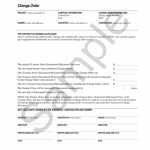
The change order construction teams use most often is G701® – Change Order. It captures what’s changing, which contract documents are affected, and how the contract sum and contract time are adjusted.
Change orders aren’t limited to added cost. They can also record deductive changes, credits, or a change with no adjustment to sum or time at all.
A change order isn’t the only way to change the contract, and it isn’t always the right one. When work can’t wait for pricing to be settled, a construction change directive lets it proceed. When a change is minor and doesn’t affect cost or time, the architect can issue supplemental instructions instead. Here’s how each one works and how to tell which one you need.
Quick Decision Guide: Which AIA Form Does the Change Need?
A201 states that changes in the work may be made through a change order, a construction change directive, or a written order for a minor change.
When the project team… | Which document | What happens |
Has agreed on the change and any adjustment to cost and time | The owner, contractor, and architect prepare and sign the change order. | |
Needs the change to proceed before the parties have fully agreed | The owner and architect sign the directive, and the contractor proceeds while the adjustment is determined. | |
Needs to provide supplemental information or order a minor change that doesn’t affect cost or time | The architect issues the instruction without needing the owner’s or contractor’s signature. |
Common Causes of Change Orders in Construction
When people hear the words “change order,” they may assume there’s been a mistake. In practice, mistakes are not the primary cause. Most of these modifications come from:
- Owner-requested scope changes that happen mid-project
- Unforeseen or differing site conditions, such as underground obstructions, concealed conditions, and hazardous materials
- Delays beyond the parties’ control, including labor disputes, shipping delays, severe adverse weather, etc.
- Approved substitutions for specified products or methods
- Insurance adjustments
- Reconciliation of allowances and unit prices
- Closeout adjustments such as back charges, liquidated damages, early completion bonuses, and punch list credits
Changes may also arise from errors or omissions in the design documents. Architects don’t guarantee a perfect set of documents; they are expected to apply their professional knowledge and experience and use reasonable and ordinary care in preparing them.
Who pays depends on the contract terms, whether the owner got something of value they hadn’t already paid for, and whether the architect met the professional standard of care.
When responsibility gets disputed, that’s when it’s time to bring in legal and insurance professionals.
What A201 Says About Change Orders
A201 addresses three methods for making changes in the work.
Change Orders Require Agreement
A change order is based on agreement among the owner, contractor, and architect. It records:
- The change in the work
- The contract sum adjustment, if any
- The contract time adjustment, if any
The words “if any” matter a lot. A change order can document a scope or schedule change without increasing the contract sum, or it can document that there is no adjustment to time.
Construction Change Directives Allow Work to Continue
Say a foundation crew begins excavation and discovers an abandoned utility line that isn’t shown in the contract documents. Work stops. The owner wants it resolved quickly, but the contractor needs written authorization before proceeding, and there’s no time to negotiate a price. That’s where a construction change directive comes in.
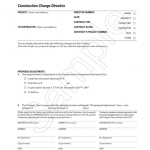
A construction change directive is a written order from the owner and prepared by the architect. It directs a change before the parties have reached full agreement on cost, time, or both.
If the contractor signs the directive and agrees with its terms or the method for determining the adjustment, that agreement becomes a change order. If the contractor disagrees, Article 7 of the A201 provides procedures for determining interim and final adjustments.
Architect’s Supplemental Instructions (ASI) Document Minor Changes
The architect may issue a written order for a minor change in the work that’s consistent with the intent of the contract documents and doesn’t adjust the contract sum or extend the contract time. Because neither moves, the architect can act alone. The owner and contractor don’t sign, which is what separates a minor change from the other two methods.
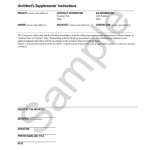
The architect documents minor changes, along with supplemental information or clarifications within the existing scope, on G710™ – Architect’s Supplemental Instructions (ASI).
An ASI isn’t a substitute for a change order or a construction change directive when the instruction affects cost or time. If the contractor believes an ASI will have that effect, the contractor should give notice before proceeding, in the manner the contract provides.
That notice matters. It protects the project record and gives the team a chance to switch to the right instrument before work continues.
How the Construction Change Order Process Works
The exact process depends on the project’s agreements and procedures, but most change orders in construction follow these steps.
1. Identify the Potential Change
A potential change may begin with:
- An owner request
- A proposal request
- An architect’s supplemental instructions, or ASI
- A construction change directive
- A request for information, or RFI
- A contractor’s request for a change
A proposal request is issued by the architect to the contractor asking for a proposal on a change or a modification to the scope of the contract. It is typically issued on the owner’s behalf, or by the architect to determine the cost of a change it is contemplating.
A change order request is a proposal issued by the contractor. The contractor may raise one on their own, or in response to a proposal request, an RFI, or an ASI that they believe changes the scope of the contract.
Not every RFI or ASI changes the contract. The project team must evaluate whether the response affects the required work, contract sum, or contract time.
2. Define the Proposed Scope
The architect or other authorized party describes the proposed change. The description should identify the affected drawings, specifications, or other contract documents.
3. Evaluate Cost and Time
The contractor prepares a proposal documenting the proposed adjustment to cost and time. Supporting information may include:
- Labor and material costs
- Subcontractor proposals
- Equipment costs
- Allowances for overhead and profit
- Schedule analysis
- Proposed changes to the date of substantial completion
The contractor doesn’t determine how a change gets priced. The contract sets the method, and when the parties can’t agree, the A201 supplies a method for pricing it.
4. Review the Proposal
The architect needs to review the proposal carefully and advise the owner whether it’s reasonable. This is one of the architect’s important duties under the owner-architect agreement. The review should confirm:
On cost:
- The proposed work isn’t already required by the contract documents
- The quantities and costs are reasonable
- The proposed costs comply with the contract’s pricing requirements
- Overhead and general conditions costs haven’t been counted twice
On schedule:
- Whether the change affects the project’s critical path
- Whether work can be resequenced to reduce delay
- Concurrent delays haven’t been included in the requested time extension
The architect’s agreement with the owner typically doesn’t require a detailed estimate. What it does require is assurance that the quantities are correct, the costs are reasonable, and the contract permits them.
Most architects are not experienced in analyzing schedule logic, but they should be able to assess whether the proposed schedule impact is reasonable. When specialized cost or schedule analysis is needed, the owner and architect should involve qualified professionals.
5. Resolve Differences
If the architect or owner doesn’t agree with the proposal, the response should be in writing and identify the disputed scope, cost, or schedule items. The parties can then work toward agreement, or they can use a construction change directive if the contract permits and the work must proceed.
6. Prepare and Execute the Change Order
Once the parties agree, the architect prepares G701. The description should be clear enough for someone outside the immediate discussion to understand:
- What is changing
- Which contract documents are affected
- How the contract sum is adjusted
- How the contract time is adjusted
List each supporting attachment and its date. Then, the owner, contractor, and architect all sign the change order.
What to Verify Before Issuing a Change Order: 10-Point Checklist
Confirm the following before G701 is issued. Each item traces back to a document or a contract requirement, so a gap here could mean a gap in the record.
The change has been authorized according to the contract documents and A201 Article 7.
The change is in writing, and no work has proceeded on a verbal instruction alone.
The scope description identifies the affected drawings, specifications, or other necessary contract documents.
The contractor has provided cost and schedule support at the level the contract documents require.
The proposal doesn't include work already required by the contract documents, so overhead and general conditions costs aren't counted twice.
The pricing follows contractual requirements, or is handled per A201 Article 7 if the parties haven't agreed.
The schedule analysis addresses any critical-path or concurrent-delay issues.
G701 states the adjustment to the contract sum and contract time, if any.
Every supporting document is listed and dated as an attachment to G701.
The owner, contractor, and architect have signed.
When an agreed-upon change also affects a subcontract, the contractor and subcontractor can use G701S® to document the corresponding change to the subcontract work, sum, and time.
Does Delivery Method Affect Construction Change Orders?
Delivery method affects how many changes a project is likely to generate, not necessarily how each one is handled. Design-build and integrated project delivery generally produce fewer change orders than design-bid-build, because the party doing the building is involved while the design is still changeable.
That said, documents alone don’t prevent change orders. Design completeness, early owner decisions, clash detection, and site investigation help to avoid changes and modifications later on, regardless of method.
What does change with delivery method is the family of agreements the project runs on.
Delivery method | Primary AIA agreements |
Design-bid-build | |
Construction manager at risk | |
Design-build | |
Integrated project delivery |
The change documents stay the same across each method: G701, G714, and G710.
Manage Change Orders with a Clear Project Record
Changes are part of construction, and they don’t always have to be contentious. When the work changes but the documentation doesn’t, that’s when things can get sticky. Using G701, G714, and G710 consistently helps project teams establish authority and maintain a reliable record from the first proposed change through closeout.
A contract management system keeps all these forms and more in one place, along with the tools you need to create consistency and contract smarter.
Frequently Asked Questions
Change orders in construction document agreed changes to the Work, the Contract Sum, or the Contract Time. Common reasons include owner-requested scope changes, differing site conditions, approved substitutions, and allowance or unit price reconciliations.
G701 is used when the owner, contractor, and architect have agreed on the change in the work and any adjustment to the contract sum and contract time.
ASI stands for architect’s supplemental instructions. The architect may issue G710 to provide supplemental information or order a minor change that doesn’t affect the contract sum or contract time.
The owner, contractor, and architect all sign a change order. Their signatures document agreement on the change and its cost and time effects.
A construction change directive may require work before the parties have agreed on cost or time. Whether the contractor must proceed depends on the situation and the governing contract documents.
G701S is used for an agreed change between a contractor and subcontractor, including adjustment to the subcontract work, sum, or time.
The instruments themselves don’t change. It affects how many are likely to arise, not how each one is papered. Design-build and integrated project delivery are generally understood to produce fewer change orders than design-bid-build.