
Quick Answer
What is a retainage in construction? Retainage is a portion of a contractor’s or subcontractor’s payment withheld to help ensure the work is completed as agreed. Typically calculated as a percentage of each progress payment, retainage is released when specified requirements are met. The contract and applicable law determine the amount withheld and the conditions for release.
Retainage may look small on a single pay app. But across a full project, it becomes significant working capital held by someone else while you’re the one paying crews, suppliers, and subcontractors on schedule.
Most contractors know retainage as “money held back until the end of a job,” but that description is incomplete. Your contract sets how much is withheld, how it is calculated, when (or if) it can be reduced, and what must happen before it is released. Applicable law may add limits or deadlines. Here’s how you can manage retainage from the first payment application through final payment.
What Is Retainage in Construction?
Retainage is a percentage of each progress payment that an owner withholds until the project reaches a milestone set in the contract. Owners use retained funds as security that the work will be completed as promised, and as a source of funds if there’s an issue.
Rates change based on several variables, such as project type, owner preferences, and negotiated terms, so don’t assume the rate from your last job applies to the next one. The contract sets the specific percentage and the conditions for releasing it. It can also establish milestones for reducing retainage along the way.
State law may impact the specifics, such as:
- Capping how much can be withheld
- Specifying release deadlines
- Imposing additional requirements on public projects
As always, it’s important to review the contract alongside the laws governing your project.
Retainage usually applies throughout the payment chain. A general contractor will often withhold retainage from their subcontractors based on what the owner is withholding from them.
How Retainage Appears on G702 and G703
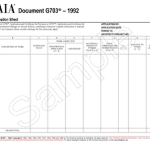
Retainage is part of the payment application workflow. G702® – Application and Certificate for Payment summarizes the payment request for a billing period. G703® – Continuation Sheet breaks the request down by schedule-of-values line item.
How you enter retainage depends on the contract. If the same rate applies across the project, you generally calculate retainage on G702 Lines 5a and 5b for completed work and stored materials. If the contract permits variable retainage by line item, enter it in G703 Column I and insert it at Section 5 of the G702. The G703 totals support the values reported on G702, and G702 shows total retainage and the current payment due after retainage is deducted.
Keep the cumulative retainage amount current. You will need it when you request a reduction or release, and reviewers will compare it with prior payment applications.
Retainage Quick Reference Guide
Task | Where It Appears | What to Confirm |
Apply a fixed retainage rate | G702, Lines 5a and 5b | Rate for completed work and stored materials |
Apply variable retainage by line item | Rate or amount allowed for each line item | |
Request a reduction or partial release | Contract requirements, and G707A when surety consent is required | Milestone, documentation, applicable law, and surety approval |
Request final release | Final payment application and closeout documents | Completion status, waivers, releases, and other contract conditions |
How Is Retainage Calculated?
The basic calculation is straightforward. If $100,000 of eligible work is completed and the contract sets retainage at 5%, the owner withholds $5,000 from that payment.
Contracts generally handle the rate in one of two ways:
- Fixed retainage: The same percentage applies to eligible completed work and, if required by the contract, stored materials.
- Variable retainage: The percentage differs by line item or changes when the project reaches a defined milestone.
Confirm the method before the first payment application. Fixed and variable retainage will require different entries on G702 and G703.
What Retainage Does to Your Cash Flow
Retainage is money you have earned but haven’t received yet. The work is in place, the related costs may already be paid, and a portion of the payment remains with the owner.
The effect compounds as a project progresses. A modest percentage withheld from each payment becomes a significant balance by completion. Those funds are unavailable for payroll, materials, or the next project.
The same pressure moves down the payment chain. The owner withholds from the general contractor, and the general contractor may withhold from subcontractors under the subcontract terms. Regardless of whether your retainage is being withheld, you’re withholding retainage from others, or both, it’s important to track every dollar.
Can Retainage Be Reduced Before the End of the Project?
Often, yes. A contract or applicable law may allow retainage to be reduced or partially released when the work reaches a certain percentage of completion or some other milestone.
Some provisions reduce the rate on future payment applications. Others release part of the retainage already withheld. Review the contract provisions and applicable law to determine which approach is available and what approvals or documentation are required.
What Happens to Retainage at Substantial Completion?
Substantial completion often affects retainage, but it doesn’t necessarily release the full balance. The contract and applicable law determine what happens.
Depending on the project requirements, substantial completion might instead:
- Trigger a reduction in the retainage rate
- Allow part of the retained funds to be released
- Leave funds withheld for any incomplete or corrective work
- Begin the process toward final completion and final payment
Before you plan around the cash, confirm what the contract says. Or better yet, negotiate your preferred position before the job even starts.
How Does Retainage Work With Subcontractor Payments?
Retainage withheld from subcontractors is governed by the subcontract. Problems often arise when the subcontract and the prime contract do not align, or when subcontractor retainage is withheld too long for reasons beyond its control.
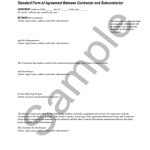
A401® – Agreement Between Contractor and Subcontractor establishes the contractor-subcontractor relationship, including payment terms. Review the retainage provisions in both agreements together and confirm:
- The withholding rate and whether it can be reduced
- The timing of release and any applicable state requirements
- The subcontractor milestones that trigger release
- The lien waiver documentation required before payment
- Whether the contractor’s retainage issues might spill over down the chain
Align these terms before work starts. Unnecessary delays in releasing subcontractor retainage strain relationships, disrupt cash flow, and create disputes.
How Do Lien Waivers Affect Retainage?
Lien waivers should be coordinated with retainage. A waiver that does not account for retained funds may accidentally waive rights to money that has not been received.
When retainage remains outstanding, match the waiver to the payment actually being made and confirm that the documentation reflects any amounts still held. Review the governing state requirements and the payment status before anyone signs.
What Is Consent of Surety to Release Retainage?
Bonded projects may require the surety’s consent before retainage is reduced or partially released.
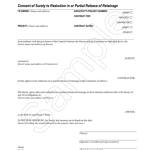
G707A™ – Consent of Surety to Reduction in or Partial Release of Retainage documents that consent and confirms that the reduction or partial release does not relieve the surety of its obligations. Build the surety’s review into the schedule, because a late request can delay payment after the milestone is reached.
When Is Retainage Finally Released?
There is no single release date for every project. And within the same project, different parties will have different retainage timelines, too. The contract, applicable law, and status of the work determine when retained funds come due.
Depending on the project, release may require:
- Reaching substantial completion, final completion, or another contract milestone
- Completing punch list and corrective work
- Submitting required closeout documents
- Submitting the final application for payment
- Providing required lien waivers or releases
- Obtaining surety consent on bonded projects
You’ll want to identify these requirements at the start of the project and track them through closeout, like any other deliverable.
Construction Retainage Checklist
Before Work Begins | During Construction | At Completion |
Confirm retainage terms | Track retainage on each payment application | Re-confirm release requirements |
Review applicable state requirements | Wrap up and document any remaining work | |
Understand reduction provisions | Track subcontractor retainage | Submit required lien waivers |
Consider partial-release terms | Document any reductions consistently | Obtain surety consent if required |
Align prime and subcontract terms | Monitor cumulative retainage | Include retainage in final payment |
Manage Retainage From the First Payment Application
Retainage should not become a conversation only when you want the money released. By then, the terms are set and the documentation trail is already established.
The contract sets the expectations. Payment applications document the withholding. Completion milestones, lien documents, closeout requirements, and surety consent all work together to support reduction and final release. When you manage retainage as a continuous, project-long process, you will have an easier time avoiding delays at closeout.
Use Coordinated Documents From Billing Through Closeout
AIA Contract Documents (ACD) provides coordinated agreements and forms for progress billing, retainage, subcontractor payments, and closeout. These documents build on nearly 140 years of industry experience and help project teams document each step with a consistent workflow.
Frequently Asked Questions
Retainage is a percentage of each progress payment that the owner withholds until the project reaches a milestone set in the contract, which is often substantial completion. The contract establishes how much is withheld, when it can be reduced, and what must happen before it’s released. State law may also limit the amount or set a release deadline.
For a fixed retainage rate, contractors generally calculate retainage on G702 Lines 5a and 5b for completed work and stored materials. When the contract permits variable retainage by line item, enter it in G703 Column I (and reproduce it again on the G702). The G702 then shows total retainage and the current payment due after retainage is deducted.
Often, yes. The contract or applicable law may allow retainage to be reduced or partially released when the project reaches an agreed percentage of completion or another documented milestone. Confirm the approach before signing and track the supporting documentation during construction.
There is no single release date for every project. Release may depend on a party’s (or the project’s) substantial or final completion, punch list work, closeout documents, the final payment application, required lien waivers, and surety consent on bonded projects. Again, the contract and applicable law are the source of truth.
Not necessarily. It’s up to the contract (and statutes, if applicable). However, it’s common for substantial completion to trigger a reduction or partial release. Or funds may remain withheld for incomplete or corrective work while the project moves toward final completion and final payment.